Thursday, May 17, 2012

2011 MAZDA Takeri Concept

Japanese car photos, 2011 MAZDA Takeri Concept pictures, wallpapers
- Car insurance agency - Car specifications - Car accident lawyers -


2011 MAZDA Takeri Concept
Click Thumbnail to download (size 1600 x 1200 pixels)


Mazda Takeri Concept

Mazda Motor Corporation has confirmed that it will showcase the global premiere of the Mazda Takeri concept car, a next-generation mid-sized saloon, at the 42nd Tokyo Motor Show on Wednesday, 30 November 2011. Mazda's theme for the 2011 Tokyo Motor Show is "Environmental Technology, Pushing the Boundaries of the Emotion of Motion. As long as there are people who love to drive, Mazda will continue to evolve the emotion of motion in harmony with environmental and safety performance."

The Mazda Takeri concept car exploits Mazda's new design language, KODO - Soul of Motion, to bring a new level of strength and allure to mid-size saloon styling. Under its appealing exterior is benchmark SKYACTIV Technology, including Mazda's first regenerative braking system. This technology converts kinetic energy to electricity during deceleration, stores it in capacitors and then uses it to power the vehicle's electrical equipment - reducing load on the engine and saving fuel. Combined with the new SKYACTIV-D diesel engine, Mazda i-stop, new lightweight structure, aerodynamic and chassis technologies, regenerative braking - enables the Mazda Takeri Concept to achieve excellent fuel economy together with vigorous performance and a comfortable high-quality ride.

Based on Mazda's new design language, 'KODO - Soul of Motion', the Mazda Takeri is designed to express "an intuitive sedan identity" and "an overwhelming emotional beauty" as the latest platform for Mazda's breakthrough SKYACTIV TECHNOLOGY. Takeri provides a supremely comfortable ride feel, thanks to the satisfying power of SKYACTIV-D and new lightweight and aerodynamic technologies. It also features the i-stop idling stop system and Mazda's first regenerative braking system. The regenerative braking system efficiently converts kinetic energy to electricity during deceleration, stores it in capacitors and then uses it to power the vehicle's electric equipment, thereby reducing load on the engine and saving fuel. Thanks to these electric devices, the Mazda Takeri Concept achieves excellent fuel economy.

The regenerative braking system represents Step Two of Mazda's Building Block Strategy. After renewing existing technologies, such as engines and bodies, Step One of the Building Block Strategy is idling stop technology (i-stop), Step Two is regenerative braking technology, and Step Three is electric drive technology (hybrid, etc.).


Auto accident lawyers Information
Timothy D. McNair
Attorney & Counselor At Law
www.mcnairlaw.com

Personal Injury & Auto

Pennsylvania Personal Injury and Car Accident Attorney!
Working to Get the Best Possible Results for You!

At the Law Offices of Timothy D. McNair, I have represented individuals and families affected by personal injury in Erie, Pennsylvania and surrounding areas since 1987.

Being hurt in an accident can be a traumatic and emotional time. If you or a loved one have been hurt in a car or truck accident, or a slip and fall incident, you may be dealing with a serious injury involving low back and neck pain, and you and your family may be affected by medical bills and lost wages, not to mention emotional trauma, Many times, there are issues of carelessness or "negligence" involving another party. A motor vehicle driver may not have followed the rules of the road, or a landowner involved in premises liability may have provided inadequate security.

Along with trained legal staff, I am a Pennsylvania personal injury lawyer who will diligently work to ensure that you receive the compensation you deserve. I know the importance of investigating an accident as soon as possible, and I have an understanding of the medical issues involved. I am effective at presenting each case in court because I have access to medical experts if necessary, and I can provide a referral for you for effective medical treatment.

The types of personal injury cases I handle include, but are not limited to:

= Motorcycle Accidents
= Car Wrecks
= Truck Accidents
= Premise Liability
= Slip and Fall Accidents
= Wrongful Death
= On-the-job Accidents


Japanese car photos, MAZDA BT-50 pictures, wallpapers

Wednesday, May 16, 2012

2011 MAZDA 6 Wagon Japanese car photos

Japanese car photos, 2011 MAZDA 6 Wagon pictures, wallpapers
- Car insurance agency - Car specifications - Car accident lawyers -


2011 MAZDA 6 Wagon
Click Thumbnail to download (size 1600 x 1200 pixels)


Exterior design appeal combined with a spacious and functional interior is one of the current Mazda 6's strongest selling points. Mazda's new family face is introduced with the updated model for a strong, sporty look that's carried out in solid build quality. On the inside, a number of changes to the interior make the cabin even more reined. There are new decorative surfaces, new materials for the dash and steering wheel, new upholstery and colour combinations.

Exterior Design
New fog lamps bezels are introduced that are more pointed and lowing. These bezels frame an "inner eye" made up of a round fog lamp inside a lowing lower lid for a strong sense of refinement. There are also newly-designed headlamps , and an upper grille with a new winged Mazda logo that is black on all grades and body-coloured on the Sports Grade. Deeply etched character lines running up from the grille between the fenders and the bonnet complete the most athletic Mazda 6 front ever.

The winged motifs from the front are repeated by the rear combination lamps that have new chrome- plated winged decorations that make the lamps look wider and seem to low even further into the side panels. The lamps themselves are a combination of clear lenses and LEDs . Mazda 6 facelift also gets stylish new 17- and 18-inch aluminium wheel designs that twist slightly for a very sporty, three- dimensional look. These not only enhance the silhouette with a premium look, they are also one kilogram lighter than the wheels of the previous model.

Customers can choose between 10 body colours for the facelift, including two all-new colours to the Mazda line-up - Clear Water Blue Metallic , Midnight Bronze Mica - and two that are new to the Mazda 6 line-up - Graphite Mica and Black Mica.

Interior Design
The facelift interior has undergone a further refinement in materials for a higher quality feel. These include new chrome detailing with piano-black panelling, and chrome plating is newly added to knobs and switches that passengers use on a daily basis - for the climate control and audio dials, parking brake knob and the inner door handles. New piano-black is introduced for the audio and climate control panelling, the centre stack frame, around the shift gate and for the panel containing the steering wheel buttons.

There is also new surface finishing on all decorative panels - matte-silver coating for the standard model, and a silver-hairline finish in full-gloss look for the Sports Grade model. Completing the facelift interior updates are new line patterns in the upholstery of the seats, and newly-available brown leather for those looking for a premium feel.

Sports Grade
At the top of the range, the Mazda 6 facelift offers an updated Sports Grade model - for all body styles - that is ideal for those who want even more dynamic expression. Special features unique to the Sports Grade include a larger brand symbol in the front grille with body coloured wing-shaped mouldings extendingsideways,anewheadlampdesignthatholdsthenewswivel-typeadaptivefrontlightingsystem, wing-shaped position lamps, silver coating for the facelift's new fog lamp bezels, rear combination lamps have clear inner lenses and LEDs. On the inside, customers get a bright, silver-hairline, full-gloss finish on all decoration panels and blackout meters with metallic-look rings for sportiness and refinement. A special leather upholstery in either black or brown leather, or black half leather, is available. The fabric portions on the half-leather seats have a vertical pattern that creates a neat, sporty look.

Roomy and Functional
Like the outgoing model, the new Mazda 6 facelift is roomy and functional. It has a host of small storage compartments and a large and flexible floor console between the front seats. To this it adds a new storage compartment near the driver's seat. The ashtray has been replaced by a box large enough for small items such as cards and the keyless entry and start system's controller. Additionally, a newly-fitted sunglasses holder is placed just behind the rear-view mirror. Karakuri rear seat functionality is still onboard that automatically folds the 60/40 rear seats down by pulling on a latch in the boot side trim panel (Hatchback and Wagon), and there is a Karakuri tonneau cover that automatically moves up and down with the wagon liftgate . This unique cover deploys a net while opening that seperates the cabin and the boot area and helps prevent cold/warm air from getting into the cabin while loading/unloading the luggage compartment. Mazda 6 has one of the widest boot openings (1,066 mm , for the wagon) and one of the widest boot floors in its segment (1,146 mm). Boot volume with all seats up is between 510 litres (hatchback) and 519 litres (wagon/sedan), which is big enough for the suitcases of five adults. And the Mazda 6 wagon and hatchback can even transport more, if need be. With the rear seats down, the wagon and hatchback have a load floor length of 1,926 and 1,879 mm respectively, and a load volume of 1,702 and 1,751 litres (floor-to-ceiling).

Comfortable to be in
A quiet and comfortable cabin greets passengers of the Mazda 6 facelift. It inherits extensive sound- absorbing materials, optimized A-pillars, mirror shapes and extremely tight-fitting doors for low wind noise. The original model's sound-optimized centre floor structure is also retained, along with dash panel and roof reinforcements, more rigid wheels and dynamic dampers on the upper arms of the front suspension and on the rear knuckles - for low road noise.

For the facelift's 2.2-litre diesel engines, noise that can occur during cold start is reduced . Measures taken here include revising the pressures, pattern and timing of fuel injection, revising the control of exhaust-gas recirculation (EGR), and using glow plugs which assist combustion.

Human-Machine Interface now easier to Use
The facelift model has been upgraded with a newly-evolved human-machine interface system (HMI), now with instruments that are easier to use. The numbers in the driver instrumentation are larger and the ambient temperature indicator is no longer in the driver cluster, but in the centre display where the front passenger can also read it.

The new steering wheel switches have been revised to be more intuitive with one function only per switch. With the new Info button, for instance, the driver can efficiently monitor fuel consumption by scrolling through the driver information system (DIS) quickly, calling up the following data:

    * Current fuel consumption
    * Average fuel consumption
    * Driving range on remaining fuel
    * Average vehicle speed

Mazda 6's Bluetooth hands-free telephoning system is enhanced to be easier and more practical and now includes an audio connection for playing music wireless from portable music players.

Higher Quality Drive and Ride
The Mazda 6's superior combination of lively, cultivated engines, "one-with-the-car" handling and ride quality make it unique to this segment. Taking this as their starting point, chassis engineers made several important changes to the steering and suspension systems of the facelift to further refine the car's drive and ride quality. The facelift version was also developed according to Mazda's lightweight strategy to the benefit of both dynamics and fuel efficiency.

Improved Straight-Line Stability and Less Vibration
New suspension components for the facelift Mazda 6 are introduced to provide better overall handling stability, great steering response and less vibration. The high-mount double wishbone front suspension gets new front stabilizer bushes with a lower spring constant. These deliver more feedback when the steering wheel is first turned and contribute to better straight-line stability. The multi-link rear suspension now has new hub mounting bolts that are more rigid than before, which helps make the rear more stable during steering operations. Engineers also introduced a new location for the recesses on the crossmember bushes at the back axle. They are now placed further inwards, which increases rear stability during braking, and helps the crossmember better resist vibration.

Superior Ride Quality
Beside these new suspension components, engineers also re-tuned the suspension of the Mazda 6 facelift to deliver an even higher quality ride without compromising Mazda 6's acclaimed handling. They gave the front strut and perimeter-frame bush mounts a lower spring constant, inclined the cavity in the rear trailing-arm bushes forward, retuned the front and back dampers for less harshness from vertical input, and revised the rear axle's bump stoppers and damper bushes. These revisions reduce vertical vibration of the cabin in the 4 and 9 Hz frequency range and horizontal vibration in the 10 to 14 Hz frequency range, resulting in a smoother, more comfortable ride.

Steering
The Mazda 6 facelift steering system has been upgraded for reined stability-feel during straight- ahead driving on the motorway. New disc springs are added to the mounting points for the steering supportyokeandthecontrol-mapsoftwareforthepower-assistedsteeringrevised.Togetherthisdelivers better, more predictable steering feel. Added to this are new steering mount bushes with a reduced spring constant that deliver optimal compliance steer and greatly improved stability, especially when cruising on the motorway.

Aerodynamics
The new, highly sculptured front bumper gives the Mazda 6 facelift a strong athletic look. In addition to the horseshoe-shape front tyre deflectors, new plate-type deflectors are added, the front lip spoiler is extended, and the rear tyre deflectors enlarged. Together, these changes limit turbulence in airflow around the wheels and body sides, and contribute to improved aerodynamics. The drag coefficients of 0.27 for the sedan and hatchback and 0.28 for the wagon are both among the lowest in the CD-segment.

New MZR 2.0 DISI Petrol - Updated Activematic Automatic Transmission
For the facelift, Mazda replaces the mid-sized petrol engine of the original model with a 2.0-litre MZR DISI petrol that is more fuel-efficient, livelier and faster. This high-revving direct-injection petrol produces a maximum output of 114 kW/155 PS at 6,200 rpm and 193 Nm of maximum torque at 4,500 rpm. It injects petrol in a finely atomized spray directly into the cylinders, and when this vaporizes it lowers the combustion temperature. This is so effective at suppressing knock - usually a problem with direct-injection petrols - that a high compression ratio can be employed, which delivers power, high acceleration and good fuel economy.

Customers can choose between Mazda's precise-shifting six-speed manual transmission - with higher third, fourth and sixth gear ratios for fuel efficiency at higher speeds - or a new five-speed Activematic automatic gearbox with manual shift mode. The five-speed automatic transmission has newly optimized torque-converter characteristics that deliver an optimal combination of acceleration and fuel economy. This powertrain provides comfortable yet sporty driving while using just 7.6 litres per 100 km (combined) in the sedan and hatchback versions.

Despite producing 6 kW/8 PS and 9 Nm more torque than the naturally-aspirated 2.0-litre it replaces, the new DISI powertrain with the manual transmission uses just 6.9 litres fuel per 100 km. And its new single-nano technology catalyst is positioned immediately downstream of the exhaust manifold to ensure quick catalyst activation and emission reduction at cold start. With the DISI engine, the sedan and hatchback each produce 4.2 percent less CO 2 than the outgoing 2-litre petrol, and meet Euro Stage V emissions standards.

Diesel Powertrains - Reined for lower Fuel Consumption and CO2
All three derivatives of Mazda's powerful and sporty MZR-CD 2.2 turbo-diesel engine are quieter-running at cold start with newly revised fuel-injection timing, revised EGR control and glow plugs to assist combustion.

For the High and Mid-Power versions, engineers reduced the outlet diameter of the turbocharger's turbine impeller from 41.5 mm to 36 mm, which reduces turbine inertia by 24 percent and increases torque. As a result, the High-Power version provides substantially improved sixth-gear acceleration from 80 to 120 km/h. The Mid-Power version now has 10 Nm more torque where it is most needed — in the 1,400-1,600 rpm range — for an exciting acceleration feel.

The Mazda 6 facelift Standard-Power diesel offers a great combination of lively power and low fuel consumption. To achieve this, torque was increased by reducing the outlet diameter of the turbocharger's turbine impeller even further (from 41.5 mm to 32 mm), thereby reducing turbine inertia by approximately 51%, and by reducing the outer diameter of the compressor impeller itself from 57 mm to 47 mm, thereby increasing torque by 30 Nm in the 1,400 rpm to 2,400 rpm range.

This delivers high torque at low- and mid-range engine speeds, and great engine response. The Standard- Power version produces 95 kW/129 PS of maximum output at 3,500 rpm, and 340 Nm of maximum torque, while using only 5.2 litres of fuel per 100 km.

The Standard-power derivative is not only efficient and frugal, but cleaner as well. It produces low amounts of CO 2 by using an optimised shape for the cavity in the crown of each piston. This makes the combustion chamber more efficient at using drawn-in air and reduces CO 2 by about 1.2 percent versus the original crown shape. Engineers also raised this version's transmission gear ratios which, when combined with this engine's quick response, delivers better acceleration feel while producing only 138 g/km of CO 2 (sedan/ hatchback).

All three diesel derivatives of the Mazda 6 facelift are Euro V compliant and engineered with reduced thermal capacity exhaust manifolds and joint pipes, which allows for quicker cold-start heat up of the catalyst and lower overall CO 2 emissions. More precise settings for the exhaust-gas recirculation (EGR) and fuel-injection systems are introduced as well, which lowers NOx emissions. These technologies are combined with a diesel particulate filter that is made of a high thermal- resistant ceramic material and includes Mazda's independently-developed catalyst. This catalyst has stored oxygen in the base material and uses it, along with oxygen present in exhaust gases, to improve combustion of soot emissions.

This makes regeneration of the filter faster and more efficient. It also realises excellent emissions, contributes to lower fuel economy and reduces the number of regenerations without sacrificing performance or driving fun.

Single-Nano Technology Catalyst for all Petrol Engines
Part of the eco-evolution of Mazda powertrains includes the introduction of a unique catalyst developed by Mazda for its petrol engines. Traditional catalysts have precious metals that cause chemical reactions on their surfaces that purify exhaust gases. Because these metals are bonded to a base material, they tend to clump into larger particles over time, which reduces their ability to purify exhaust gases. To compensate for this problem, catalysts have traditionally used large amounts of precious metals. Mazda solved this problem by successfully embedding precious-metal particles in the catalytic base material that are nano-sized (< 5 nm) for the first time ever. These particles remain in place during long periods of exposure to high exhaust heat, which retains an effective surface area for purifying gases. Not only does Mazda's unique single-nano technology catalyst help petrol engine efficiency, it needs about 72 percent fewer precious metals, which preserves these rare natural resources and limits the cost of production.

MZR 2.5 Petrol - An Exclusive Driving Experience
The top-of-the-range MZR 2.5 petrol produces 125 kW/170 PS of maximum power at 6,000 rpm and 226 Nm of torque at 4,000 rpm. With a high-rigidity block, two balancer shafts, a dual-mass damper and a flexible flywheel this engine develops its power in a smooth, cultivated way. Under the bonnet of the new Mazda 6 facelift, this engine delivers a truly premium driving experience. Its compact size and light weight, along with fuel-optimizing technologies like sequential-valve timing (S-VT) and a variable intake system (VIS), maximize power delivery and torque across the speed range, while keeping fuel consumption to a minimum. Aerodynamic upgrades, revised gear ratios and powertrain control module (PCM) have reduced consumption slightly (0.1 litre per 100 km less), while chassis updates make it more stable while cruising; something this engine is very good at. It features the new single-nano technology catalyst and meets Euro Stage V emission standards.

MZR 1.8 Petrol - Now even more Frugal at the Pump
The MZR 1.8 petrol with five-speed transmission is a great combination of lively power and low consumption. With electronic throttle control, it delivers great drivability, and its VIS optimises the charging effect in the intake manifold according to engine speed by varying the length of the intake passages to ensure optimum power delivery throughout the rev range. It produces 88 kW/120 PS at 5,500 rpm, and 165 Nm of torque at 4,300 rpm, but has revised gear ratios to use less fuel than the current engine (approx. 6 percent less in the hatchback).

Passive Safety
Mazda 6 facelift's triple-H body structure is made of high-tensile steels and was launched with reinforcements to practically every part of the body shell so that it is very effective at dispersing impact energy away from the cabin and the fuelsystem. On the inside, Mazda 6 facelift's standard safety package includes active front head restraints, six airbags, brake and clutch pedals that do not intrude into the cabin during frontal impact, impact-absorbing trim on the pillars and roof side rails, and ISOFIX child safety seat anchors and top tethers at the outside of each rear seat.

Pedestrian Protection
Mazda 6 facelift has an energy-absorbing space between the bonnet and the engine, and structures for impact energy absorption in the cowl grille and fender brackets, which mitigate the chance of serious head injuries. It also employs energy-absorption foam in front of the front bumper beam and plastic reinforcements at the bottom of the front bumper, which help lower the seriousness of leg injuries.

Active Safety - New Technologies for on-road Safety
Active safety for the new Mazda 6 facelift is based on the same package of the outgoing model. It has large 299 mm front disc brakes with callipers that have 57 mm single pistons, and 280 mm rear discs with callipers that have 34.9 mm diameter single pistons. These form the basis of four-wheel ABS, electronic brake distribution, brake assist, electronic traction control (TCS) and DSC all standard. The Mazda 6 facelift also has a tyre pressure monitoring system and a parking sensor system. Mazda's rear vehicle monitoring system is also onboard. Employing two wide-angle, 24 GHz microwave radar units on the right and left side of the rear bumper, this system is a fully independent active safety feature that detects and warns the driver of an approaching vehicle from behind - when driving at speeds over 60 km per hour - before he has a chance to change lanes by mistake. It also detects vehicles driving in the blind spot area, and is effective even in bad weather conditions. The two radar units are positioned to face outwards from the vehicle's centre line to cover the left and right lanes at the back of the car within a range of about 50 m. These radar units emit microwaves, which reflect off a following vehicle - including smaller vehicles like motorcycles - and are picked up again by the radar units in the bumper. To this, the facelift adds the following four new active safety systems for even more peace of mind.

New Swivel-Type Adaptive Front Lighting System (AFS) with Bi-Xenon Headlamps
The Mazda 6 facelift is available with a new swivel-type AFS for even better night time visibility. The system uses driver steering input and car speed to better illuminate the curve. It swivels the left or right headlamp, depending on turn direction, by up to 15° to illuminate that part of the road that the car will reach up to three seconds later. It works with both xenon high and low beams.

New Hill Launch Assist (HLA) Function
Hill starts are easy with Mazda 6 facelift's new HLA system. When a driver stops on hill, the system automatically calculates the gradient of the hill using the acceleration sensor in the airbag unit. If the grade is 2° or steeper, it keeps the brakes applied when the driver releases the brake pedal to prevent the car from rolling backwards downhill. When the driver lets off the brake pedal and presses the gas pedal again, the brake-control functionality of the DSC system holds the car steady until there is enough engine torque to move the car safely up the slope.

Emergency Stop Signal (ESS)
If the driver has to brake suddenly in an emergency situation, Mazda 6 facelift sends an immediate signal to following cars that goes beyond mere brake lights. If the driver is travelling over 50 km/h and decelerates by a minimum of 0.7 G, the hazard-warning lamps lash rapidly to alert cars behind. Once car speed drops to 10 km/h or less, or comes to a complete halt, the hazard-warning lamps continue lashing but at a slower rate (their normal rate) to help prevent a rear impact when stationary. The hazard warning lights are automatically switched off again once the brake pedal is released.

Smart Turn Function for Signalling a Lane Change
Smart Turn Function is introduced on Mazda 6 facelift. It allows the driver to signal a lane change with the blinker by simply moving the turn lever slightly once: the turn signal then blinks three times on the side indicated.


Auto accident lawyers Information
Timothy D. McNair
Attorney & Counselor At Law
www.mcnairlaw.com

Personal Injury & Auto

Pennsylvania Personal Injury and Car Accident Attorney!
Working to Get the Best Possible Results for You!

At the Law Offices of Timothy D. McNair, I have represented individuals and families affected by personal injury in Erie, Pennsylvania and surrounding areas since 1987.

Being hurt in an accident can be a traumatic and emotional time. If you or a loved one have been hurt in a car or truck accident, or a slip and fall incident, you may be dealing with a serious injury involving low back and neck pain, and you and your family may be affected by medical bills and lost wages, not to mention emotional trauma, Many times, there are issues of carelessness or "negligence" involving another party. A motor vehicle driver may not have followed the rules of the road, or a landowner involved in premises liability may have provided inadequate security.

Along with trained legal staff, I am a Pennsylvania personal injury lawyer who will diligently work to ensure that you receive the compensation you deserve. I know the importance of investigating an accident as soon as possible, and I have an understanding of the medical issues involved. I am effective at presenting each case in court because I have access to medical experts if necessary, and I can provide a referral for you for effective medical treatment.

The types of personal injury cases I handle include, but are not limited to:

= Motorcycle Accidents
= Car Wrecks
= Truck Accidents
= Premise Liability
= Slip and Fall Accidents
= Wrongful Death
= On-the-job Accidents


Japanese car photos, MAZDA BT-50 pictures, wallpapers

Monday, May 14, 2012

2012 HONDA Crosstour Japanese car photos

Japanese car photos, 2012 HONDA Crosstour
- Car insurance agency - Car specifications - Car accident lawyers -


2012 HONDA Crosstour
Click Thumbnail to download (size 1600 x 1200 pixels)


The 2012 Honda Crosstour approaches the crossover SUV formula from a distinctively sleek, sporty and fuel-efficient perspective while also maximizing the interior's cargo capacity, versatility and premium feel. For 2012, the official name becomes Crosstour, replacing Accord Crosstour (2010 and 2011 models).

The Honda Crosstour's exterior design emphasizes a bold, aerodynamic look that also conceals an accommodating rear cargo area with a large, lift-over tailgate. Premium interior styling, appointments and details extend from the passenger compartment all the way through the cargo area. An under-floor storage area in the rear of the vehicle adds functionality, while reversible cargo floor panels accommodate dirty objects.

The Honda Crosstour is available in two trim levels, the Crosstour EX and EX-L, with Real Time 4WD also available on the EX-L model. For 2012, new features on the Crosstour EX include auto on/off headlights, a rearview camera, Bluetooth HandsFreeLink and USB audio interface. Two new colors are also available on all Crosstour models: Twilight Blue Metallic replaces Glacier Blue Metallic, and Basque Red Pearl replaces Tango Red Pearl.

The Honda Crosstour comes standard with a 3.5-liter i-VTEC V-6 engine with Variable Cylinder Management (VCM) for power and efficiency. The engine produces 271 horsepower at 6,200 RPM and 254 lb-ft. of torque at 5,000 RPM, while achieving an EPA-rated city/highway/combined fuel economy of 18/27/21 mpg on 2WD models. Meanwhile the Crosstour EX-L with Real Time 4WD delivers an EPA-rated city/highway/combined fuel economy rating of 18/26/21 mpg.

To maximize efficiency, the engine's VCM cylinder deactivation system is programmed to run on 3, 4 or 6 cylinders, based on current power requirements, and a technologically advanced 5-speed automatic transmission is standard equipment. For true utility-vehicle capability, the Honda Crosstour provides 6.2 inches of maximum ground clearance in addition to the available Real Time 4WD system.

Besides its new-for-2012 auto on/off headlights, Bluetooth HandsFreeLink and USB audio interface, standard features on the Crosstour EX include projector-beam headlights, fog lights, 17-inch aluminum wheels with P225/65R17 all-season tires, a moonroof, body-colored power side mirrors with defrost, chrome door handles, auto up/down driver and front passenger side windows and rear privacy glass. Inside are dual-zone automatic air conditioning with second-row ventilation, a 360-watt AM/FM 6-disc audio system with seven speakers, steering wheel-integrated audio controls, a compass and outside temperature indicator, cruise control, an easy fold-down 60-40 split rear seatback, a hidden removable utility box and more.

Honda Crosstour EX-L adds 18-inch aluminum wheels with P225/60R18 all-season tires, leather-trimmed seating surfaces with heated front seats, a memory driver-side seat and memory side mirrors with reverse tilting capability, a leather-wrapped steering wheel and gearshift knob, Kevlar cone audio speakers, front aluminum dome-type tweeter speakers, an auto day/night dimming rearview mirror, a HomeLink transmitter and a cargo privacy cover.

The Honda Satellite-linked Navigation System and the Real Time 4WD mentioned above are available together or separately on the Crosstour EX-L. The Navigation system includes a rearview camera with guidance lines integrated into the display.

Safety technology includes the Advanced Compatibility Engineering (ACE) body structure, a Honda-exclusive body design that enhances occupant protection and crash compatibility in frontal collisions. Additional safety equipment on the Crosstour includes Vehicle Stability Assist (VSA), anti-lock brakes with electronic brake distribution and brake assist, side curtain airbags with a rollover sensor, driver's and front passenger's side airbags with passenger-side Occupant Position Detection System (OPDS), dual-stage, multiple-threshold front airbags, and active front seat head restraints.

The Honda Crosstour is assembled in Ohio at the Honda of America Mfg., Inc., East Liberty Auto Plant using domestic and globally sourced parts.


Sunday, May 13, 2012

2012 HONDA Fit Sport photos

Japanese car photos, 2012 HONDA Fit Sport
- Car insurance agency - Car specifications - Car accident lawyers -


2012 HONDA Fit Sport
Click Thumbnail to download (size 1600 x 1200 pixels)


Honda Fit Sport

The Honda Fit builds on its proven strengths for 2012 with updated styling on Honda Fit Sport, interior upgrades on all models, and the addition of new standard and available features.

The Fit's compact size and tight turning diameter (34.4 feet, curb-to-curb) can conveniently navigate space-confined urban areas and fit in small parking spaces. Yet a roomy and versatile interior offers the convenience and cargo volume of a relatively larger vehicle. Compared to any other vehicle in the subcompact class, the five-passenger Fit provides the lowest, flattest cargo floor and the most cargo volume of 57.3 cu-ft. when the rear seats are down. Its four distinct seat configurations are designed to accommodate large objects ranging from mountain bikes to surfboards to tall houseplants.

Honda Fit Sport exterior updates for 2012 include new designs for the front grille and bumper, black headlight bezels and a dark "machined surface" finish for the alloy wheels (replaces a painted finish appearance). The entry-model Fit retains its exclusive front fascia design and for 2012 receives body-color exterior mirrors (previously black) and updated wheel covers.

Inside, the Honda Fit Sport interior is enhanced with dark metallic dashboard components for a unified color theme (replacing the previous gray and black theme). Honda Fit Sport receives additional chrome accents around instrument displays. All models receive newly designed console-mounted center beverage holders along with console ambient lighting, which provide easier access and greater stability. All models also receive added sound insulation measures in the floor, front fenders and A-pillars, plus thicker front corner-window glass, to help create a quieter, more-refined cabin environment. Two new colors are available: Blue Raspberry Metallic and Orangeburst Metallic, which replace similar colors from the prior model year.

The top-of-the-line Honda Fit Sport includes a long list of exclusive, standard features compared to the entry-model Fit. For 2012, it gains standard steering wheel-mounted audio controls for fingertip operation (previously exclusive to navigation-equipped models) and upgraded seat fabric. When equipped with the Honda Satellite-Linked Navigation System™ with Voice Recognition, the Honda Fit Sport now includes Bluetooth® HandsFreeLink® to help make hands-free telephone calls more convenient. The enhanced system also includes a Bluetooth Audio capability with compatible phones and devices.

Though the Fit has an overall exterior length of just 161.6 inches, the interior provides an impressive 90.8 cubic feet of passenger volume. There's comfortable seating for up to five passengers, and behind the rear seats, there's 20.6 cubic feet of storage space - much more than you'd find in a typical sedan. For enhanced versatility, the exclusive 60/40 split rear Magic Seat® offers multiple seating and cargo-carrying configurations. With its one-motion dive-down functionality, it can fold flat into the floor to maximize rear cargo volume. The Fit's interior can also be easily converted to tall object mode or long object mode based on the shape of the cargo.

The 1.5-liter, i-VTEC® 4-cylinder engine is tuned to deliver an engaging combination of power and fuel economy. A five-speed manual transmission is standard and a five-speed automatic transmission is available. Steering wheel-mounted paddle shifters on Honda Fit Sport models equipped with the available automatic transmission allow for manual gear selection.

All models are powered by a four-cylinder engine that produces 117 horsepower at 6,600 rpm and 106 lb-ft. of torque at 4,800 rpm. When equipped with the available automatic transmission, the Fit has an Environmental Protection Agency (EPA) city/highway/combined fuel economy rating of 28/35/31 miles per gallon. The Honda Fit Sport with the available automatic transmission has an EPA city/highway/combined fuel economy rating of 27/33/30 miles per gallon. All manual transmission-equipped models have an EPA city/highway/combined fuel economy rating of 27/33/29 miles per gallon.

A sporty, refined and dynamic driving experience is provided by the front MacPherson strut suspension and torsion beam rear suspension. Fifteen- and 16-inch wheels (Fit and Fit Sport, respectively) feature 175/65 R15 84S (Fit) and 185/55 R16 83H (Fit Sport) tires. The standard anti-lock braking system (ABS) with Electronic Brake Distribution (EBD) uses 10.3-inch ventilated discs in the front and 7.9-inch drums in the rear.

All Fit models are equipped with a wide range of standard safety equipment including Vehicle Stability Assist (VSA), the Advanced Compatibility Engineering™ (ACE™) body structure, anti-lock brakes and more. Dual-stage, multiple-threshold front airbags, front-side airbags with passenger-side Occupant Position Detection System (OPDS) and side-curtain airbags are also standard equipment for 2012.

Standard comfort and convenience features include air conditioning, cruise control, remote entry, a 160-watt AM/FM/CD audio system with four speakers, a USB audio interface, an auxiliary audio input jack, MP3/WMA playback capability, Radio Data System (RDS), power windows, power mirrors, power door locks and a security system.

The Honda Fit Sport adds or replaces: alloy wheels, an underbody aero kit, rear roofline spoiler, fog lights, illuminated steering wheel mounted audio controls and upgraded seat fabric. For improved audio performance, the Honda Fit Sport audio system has a total of six speakers. The Fit Sport is available with the Honda Satellite-Linked Navigation System™ with Voice Recognition, which features a 6.5-inch screen and more than seven million points of interest. The Honda Satellite-Linked Navigation System debuting on the 2012 Fit Sport features 16 GB of flash memory in place of the DVD-based system used previously. Like other Honda navigation systems, this new system allows simple, intuitive operation and has an extensive on-board database.


Saturday, May 12, 2012

2012 HONDA Odyssey Japanese car photos

Japanese car photos, 2012 HONDA Odyssey
- Car insurance agency - Car specifications - Car accident lawyers -


2012 HONDA Odyssey
Click Thumbnail to download (size 1600 x 1200 pixels)


Completely redesigned for the 2011 model year, the 2012 Honda Odyssey remains the class-leading minivan for fuel economy and safety ratings, while continuing to offer the refinement, space and engaging driving experience that people have come to expect from this highly acclaimed family vehicle.

Class-leading achievements include the highest EPA highway fuel economy rating for an eight-passenger minivan of 28 mpg for Honda Odyssey Touring. Plus, all Odyssey models achieve the best possible safety ratings from both the National Highway Traffic Safety Administration (NHTSA) with a 5-Star Overall Vehicle Score and the Insurance Institute for Highway Safety (IIHS) with a TOP SAFETY PICK, an achievement that no other currently-tested minivan can match.

Designed and built in the United States, the five available models consist of the Honda Odyssey LX, EX, EX-L, Touring and Touring Elite, with each providing a unique combination of features, value, luxury and in-vehicle entertainment technology. Changes for 2012 include the addition of select features to the Odyssey EX that were previously exclusive to the Odyssey EX-L. For 2012, the Odyssey EX now includes Bluetooth® HandsFreeLink®, the intelligent Multi-Information Display (i-MID) with an 8-inch TFT screen, a 2-GB CD Library and a USB Audio Interface. The 2012 Odyssey Touring receives an exclusive exterior color, White Diamond Pearl, replacing Taffeta White on the prior model.

Body
The Honda Odyssey body uses a tapered cabin design with a signature "lightning bolt" character line to create a dynamic and distinctive appearance. Additionally, the styling cue creates a relatively large third-row window that enhances the outward perspective for third-row passengers. Engineered for a quiet interior, the Odyssey's highly-rigid body with 59 percent high-strength steel (an exceptional amount by industry standards) helps enhance the effectiveness of the vehicle's sound-deadening material to isolate road noise. The high-strength steel also helps to reduce body weight for better fuel economy and optimize body rigidity for agile handling.

Interior and Features
The interior offers multiple modes for accommodating child seats, adult passengers and cargo, along with offering a comprehensive range of in-vehicle entertainment technology. To fulfill its design goal to be the ultimate family vehicle, the interior provides three rows of comfort-oriented seating with generous sedan-like legroom in each row; along with providing up to five Lower Anchors and Tethers for CHildren (LATCH) positions for child seats (the Odyssey LX has four LATCH positions). The passenger volume measures 172.6 cu-ft. (Odyssey LX and EX) and the cargo volume ranges between 38.4 cu-ft. cargo volume (all seats up) to 148.5 cu-ft. depending on the seating configurations. A 4x8 sheet of plywood can fit inside the Odyssey's cargo bay with the second-row seats removed, and 10-foot-long 2x4 studs can fit inside the vehicle with the available front console removed.

To help enhance driver comfort, especially on long trips, the driver's seat features 10-way power adjustable seating (8-way power adjustable on Odyssey LX). A "3-mode" second-row seat design provides the ability to attach up to three child seats across the second row (Odyssey EX and above) by relocating the outboard seats to alternate positions closer to the doors. The one-motion, 60/40 split third-row Magic Seat®, one of the Odyssey's original concepts and most versatile features, affords legroom for average size adults and is easy to open and close with one hand.

Highlights of standard features on all models include air conditioning with manual front and rear controls, power driver's seat, power windows with auto-up/down driver's and front-passenger's windows, tilt and telescopic steering column, a maintenance minder system and more. Honda Odyssey EX models and above come standard with power sliding rear doors, an "intelligent" Multi-Information Display (i-MID) with customizable wallpaper, center console storage, a flip-up trash bag ring, conversation mirror and more. Odyssey EX-L models include leather-trimmed seating surfaces (front and outboard second row), heated front seats, XM Radio®, power tailgate, a cool box, rearview camera and much more. Standard equipment on the Honda Odyssey Touring includes the Honda Satellite-Linked Navigation System, a Rear Entertainment System with a 9-inch display, driver's seat with two-position memory, 115 Volt power outlet, fog lights, parking sensors, six-speed automatic transmission and much more. The Odyssey Touring Elite adds an Ultra-Wide Rear Entertainment System (RES), blind-spot information system, High Intensity Discharge (HID) headlights and more.

Technology
Technology features available on certain models include a Honda Satellite-Linked Navigation System with Voice Recognition, which is available on the Odyssey EX-L and standard on the Odyssey Touring. The system features an 8-inch, high-resolution VGA color display and GPS technology to provide turn-by-turn guidance to a destination, in addition to other features including subscription-free FM Traffic data and a Zagat® restaurant guide.

Standard on the Honda Odyssey Touring Elite is the state-of-the-art, factory-integrated Rear Entertainment System that includes an ultra-wide 16.2-inch flip-down LCD screen and a 12-speaker, 650-Watt sound system capable of reproducing Dolby® Digital 5.1 Surround Sound in 360-degree detail. A High-Definition Multimedia Interface (HDMI) video input and two wireless headphones for rear passengers are also provided. The Odyssey Touring Elite also includes the Blind Spot Information system (BSI), which helps alert the driver via indicators near the side mirrors when other vehicles are detected in set zones to the left and right of the Honda Odyssey.

Powertrain
An advanced 3.5-liter, 24-valve, SOHC, i-VTEC V-6 engine with Variable Cylinder Management (VCM) provides a balanced combination of performance, fuel economy and low emissions. The engine produces 248 hp (the most ever for Odyssey) and 250 lb-ft. of torque, while delivering an EPA-estimated city/highway/combined fuel economy of 19/28/22 mpg on Odyssey Touring models (18/27/21 mpg on Odyssey LX, EX and EX-L models). A 5-speed automatic transmission is standard on Odyssey LX, EX and EX-L models. Odyssey Touring models feature a 6-speed automatic transmission for enhanced driving refinement.

Chassis
A 118.1-inch wheelbase, a fully independent suspension design and features such as Vehicle Stability Assist (VSA®) with traction control contribute to the Honda Odyssey's confident driving performance and comfortable ride. The MacPherson strut front and multi-link rear suspension allows each wheel to maintain its own contact patch with the road, which is a significant benefit compared to less sophisticated torsion beam-style rear suspensions often used on other minivans.

Safety
The Honda Odyssey was recently named a TOP SAFETY PICK from IIHS, the institute's highest safety rating. The rating recognizes vehicles that do the best job of protecting vehicle occupants involved in front, side and rear crashes, plus rollover performance based on ratings in IIHS tests, as well as having a standard electronic stability control system. The Odyssey earned the highest-possible score of GOOD in all four ratings, including the rigorous roof-strength test. In addition to earning the TOP SAFETY PICK designation, the Odyssey was one of the first vehicles to achieve NHTSA's best-possible "Overall Vehicle Score" of 5 stars. The Honda Odyssey achieved its top "Overall Vehicle Score" with 5-star ratings for the frontal crash safety test and both side crash safety tests in all evaluated front and rear seating positions and scenarios. The Odyssey also received 4 stars for the rollover rating.

An extensive list of safety equipment includes the Advanced Compatibility Engineering™ (ACE™) body structure, a Honda-exclusive body design that enhances occupant protection and crash compatibility in frontal collisions. Additional standard safety equipment includes: Vehicle Stability Assist™ (VSA®); anti-lock brakes with electronic brake distribution (EBD) and Brake Assist; three-row side-curtain airbags with a rollover sensor; driver's and front passenger's side airbags with passenger-side Occupant Position Detection System (OPDS); and dual-stage, multiple-threshold front airbags.


Friday, May 11, 2012

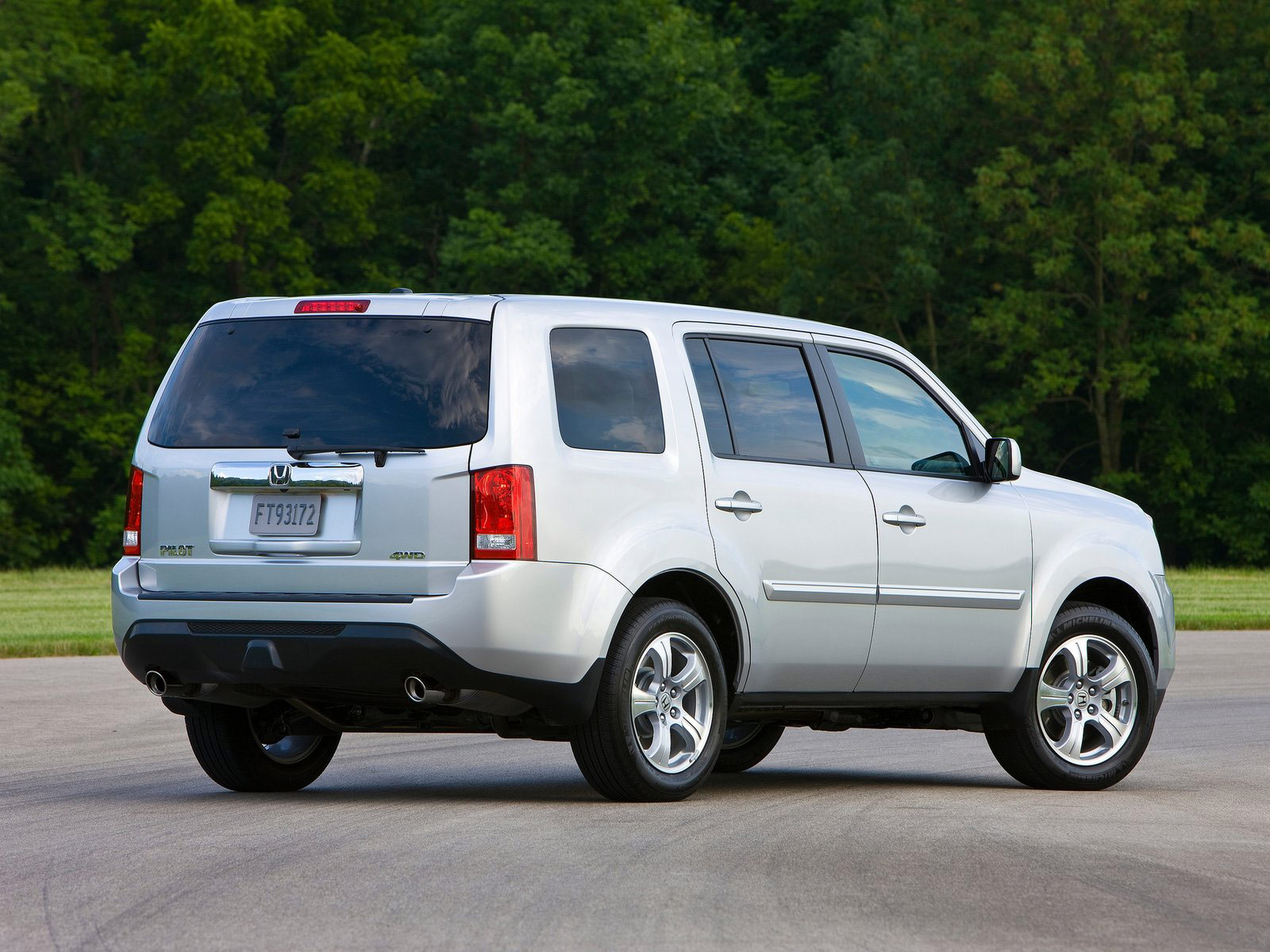
2012 HONDA Pilot Japanese car photos

Japanese car photos, 2012 HONDA Pilot
- Car insurance agency - Car specifications - Car accident lawyers -


2012 HONDA Pilot
Click Thumbnail to download (size 1600 x 1200 pixels)


The Honda Pilot eight-passenger SUV receives a wide range of upgrades for 2012 with a sleeker front-end design, enhanced interior features and an EPA highway fuel economy rating of 25 mpg on two-wheel-drive models, an increase of 2 mpg compared to 2011 models.

The new styling for the front fascia, with its three-bar chrome-style grille, conveys a more sophisticated crossover SUV appearance. Interior styling changes focus on instrument panel refinement and a more intuitive button layout. For 2012, audio system upgrades on Honda Pilot EX and EX-L models include a 2 GB CD-Library (CD-L) and Bluetooth® Audio Streaming, along with the addition of Bluetooth HandsFreeLink® to those trim levels.

Feature upgrades on the Honda Pilot EX-L include the addition of a full-color 8-inch intelligent Multi-Information Display (i-MID) for audio and vehicle information. Models equipped with the available Honda Satellite-Linked Navigation System for 2012 receive subscription-free FM Traffic, 15 GB audio hard disk drive memory (HDD), and a higher-resolution display.

The fuel economy gains for 2012 result from combined improvements to the powertrain, chassis and vehicle aerodynamics. The 250 horsepower i-VTEC V-6 engine includes additional measures for friction reduction and improved efficiency. The 2012 Pilot becomes quieter with additional noise insulation and other enhancements throughout the vehicle.

Body
The 2012 Honda Pilot's new grille and front fascia replace the prior model's six-sided grille insert with a distinctive three-bar horizontal design. Reconfigured multi-reflector halogen headlights and turn signals contribute to the new look with a layout that relocates the turn signal from an outboard position to an inboard position within the headlight housing. A new front air dam and optimized strakes (the rectangular air deflector in front of the wheels) help reduce frontal area and unwanted air turbulence, both of which impact fuel economy. Rounding out the exterior design changes, Pilot EX and above models receive an all-new five-spoke, 18-inch aluminum alloy wheel design (plus 1-inch compared to the previous model). Honda Pilot Touring alloy wheels feature an exclusive six-spoke design with a high-contrast machined surface. Pilot LX models are equipped with 17-inch styled-steel wheels.

Exterior dimensions for 2012 are similar to 2011 with identical measurements for width (78.5 inches), height (71.0 inches for Pilot LX and 72.7 inches for Pilot EX, EX-L and Touring) wheelbase (109.2 inches) and track (front 67.7 / rear 67.5 inches). Overall length increases 0.5 inches to 191.4 inches as a result of the front styling changes. Ground clearance is basically the same at 7.97 inches, down slightly from 8.00 inches in the previous model.

Interior
Interior styling changes are designed to increase refinement throughout the cabin while also enhancing the intuitive nature of the controls. The instrument panel uses a more unified color theme with less contrast between panels. A glossy black center panel for audio controls replaces the high-contrast silver panel of the previous model. Speedometer and tachometer gauge faces incorporate a new look with distinct segments surrounding each meter's perimeter, along with white background illumination for nighttime driving instead of the previous model's aqua-blue background illumination. The redesigned center stack adds a subtle U-shaped character line and different textures to create a layered effect on the panel. Ideal for phones and audio players, a larger center storage pocket is 0.4-inches taller. A simplified layout for the climate controls replaces some of the buttons with dials for a more intuitive, easy-to-use overall design.

The top of the center stack on each Pilot model contains a unique display that varies by model. Honda Pilot LX and EX models contain a three-line display. Pilot EX-L models for 2012 (without navigation) receive the new i-MID, which provides a convenient platform for integration of vehicle information and compatible personal electronics through a color LCD screen and intuitive steering wheel controls. The Pilot EX-L rearview camera display appears in the i-MID and includes guidelines for judging parking distance. The i-MID also shows HandsFreeLink® operation, user-loaded wallpaper such as photos, a fuel-economy display and an audio interface.

Available on Honda Pilot EX-L and standard on Touring, the 2012 Pilot adopts the latest version of the Honda Satellite-Linked Navigation System™2. Now with 60 GB of total system memory (includes 15 GB allocated for user media) and voice recognition for three languages, this system uses multiple global positioning satellites covering all of the U.S. including Alaska and Hawaii, as well as Canada and Puerto Rico. Its new FM Traffic feature provides free, continuous updates on traffic and incidents, helping drivers avoid gridlock. The hard drive can store thousands of minutes of music, which is accessible by simple voice commands using the Song By Voice™ feature. Additionally, 2012 Pilot models with navigation feature a multi-view rear camera (wide view, normal view and top-down view), with the image displayed on the navigation screen for convenient parking help when in Reverse.

Adding to the comfort level of the 2012 Honda Pilot is a reduction in noise, vibration and harshness (NVH). Enhanced body seam sealing around the unit-body connection points, and re-tuned rear suspension sub-frame mounts, result in lower noise levels in the passenger cabin. Other specific NVH countermeasures include body-seam sealants to reduce air leaks, enhanced pillar separators, revised insulation materials and acoustic windshield glass on all models.

The tailgate features a lift-up glass hatch for convenient access to the rearmost cargo area. The model's 18.0 cubic-feet of cargo space behind the third row matches or exceeds the trunk space of a typical large sedan and can accommodate items as large as a mid-size cooler or a folded stroller. For maximum cargo space, the second and third rows fold flat into the floor to create 87.0 cubic feet of storage capacity, while also providing sufficient width for 4-foot-wide items.

The cargo area has a hidden storage well that provides 2.8 cu-ft. of additional space and can combine with the above floor storage area by securing the hinged cover against the seatback. The Pilot Touring also provides a load-supporting cargo net (20 lbs. maximum weight) to further subdivide the rear cargo area.

Key interior dimensions are identical to the previous Pilot model, including front headroom (40.0 in. for Pilot LX and EX, 39.3 in. for moonroof-equipped Pilot EX-L and Touring), second-row headroom (39.8 in.) and rear headroom (38.2 in.), legroom (front 41.4 in., second-row 38.5 in., and third-row 32.1 in.). Passenger volumes are likewise identical (153.7 cu-ft. for Pilot LX and EX, 152.7 cu-ft. for Pilot EX-L and Touring), as are cargo volumes (87.0 cu-ft. total, 47.7 cu-ft. behind second-row seats, and 18.0 cu-ft. behind third-row seats).

Safety
Safety technology includes the Advanced Compatibility Engineering™ (ACE™) body structure that helps reduce the amount of crash energy reaching the passenger compartment and can enhance frontal collision compatibility. Additional safety equipment includes three-row side curtain airbags with a rollover sensor, driver's and front passenger's side airbags with passenger-side Occupant Position Detection System (OPDS), active front seat head restraints and anti-lock brakes with electronic brake distribution and brake assist. Vehicle Stability Assist™ (VSA®), commonly referred to as Electronic Stability Control, is standard on all models. The 2012 Honda Pilot also meets new federal regulations with taller rear head restraints.

Honda has targeted the new Pilot to achieve best-in-class safety ratings, including a NHTSA 5-Star Overall Vehicle Score, and a TOP SAFETY PICK designation from the Insurance Institute for Highway Safety (IIHS) reflecting the institute's new procedures for Front Offset, Side Impact Collision Evaluation (SICE), Roof Crush and Head Restraint tests.

Powertrain
Power comes from an advanced 24-valve, all-aluminum engine with "intelligent" Variable Valve Timing and Lift Electronic Control (i-VTEC) technology with Variable Cylinder Management (VCM). The VCM system allows the V-6 engine to operate in six-cylinder mode for power and four- or three-cylinder modes for efficiency. Fuel economy improves for 2012 with an EPA-estimated city/highway/combined fuel economy of 17/24/20 mpg on 4-wheel-drive models and 18/25/21 mpg on 2-wheel-drive models. Representing a 1-mpg increase in City, a 2-mpg increase in Highway and a 2-mpg increase in Combined, this gives the 2012 Pilot 2WD the highest fuel economy of any 8-passenger SUV and the Honda Pilot 4WD the highest fuel economy for any mid-size 4WD SUV.

Fuel-efficiency enhancements include the application of engine friction-reduction technologies including a plateau-honed engine block, low-friction piston treatments, ion-plated oil rings and a load-variable alternator. The use of dual-electrode spark plugs, 0W-20 low-friction oil and low-friction automatic transmission fluid contribute to higher efficiency. The VCM operation range has also been expanded.

The 5-speed automatic transmission features Grade Logic Control to help maintain the most appropriate gear when going uphill or downhill, thereby avoiding gear "hunting." The available VTM-4 system on Pilot 4WD models adds fully automatic 4-wheel-drive capability. VTM-4 delivers seamless, "decision-free" application of 4-wheel-drive when needed, a key benefit compared to conventional systems. The system also provides a "lock mode" - available when in first or second gears up to 18 mph and activated by a button on the instrument panel - that can deliver the maximum-possible torque transfer to the rear wheels to aid in extraction from extremely low traction or stuck conditions.

Chassis
The suspension is a fully independent system with front MacPherson strut and rear multi-link with trailing arm designs that contribute to responsive driving characteristics for an SUV. The 109.2-inch wheelbase facilitates a smooth ride. A tight turning diameter of 37.9 feet aids maneuverability in tight parking situations.

Chassis improvements that directly improve fuel economy include a variable-displacement power steering pump, low-rolling-resistance tires, and low-drag front ventilated and rear disc brakes. Improved aerodynamics, the front strakes, splash shields and inner fenders, and reduced frontal area also contribute to improved fuel economy.

Models and Features
As with the prior model year, the 2012 Pilot is available in four model choices (Pilot LX, EX, EX-L and Touring), and each is offered in either 2-wheel-drive or 4-wheel-drive configuration.

Honda Pilot LX
Standard comfort and convenience features on the Pilot LX include a front and rear air conditioning system with air-filtration system, keyless entry with simplified operation, tilt and telescope steering column, cruise control, power windows with auto-up/down driver's and passenger's window, power door and tailgate locks, AM/FM/CD stereo system with seven speakers including a subwoofer and Radio Data System (RDS), trip computer, heat-rejecting tinted glass, integrated Class III towing receiver, and more. For 2012, the Pilot LX adds AAC audio file playback capability from data discs to the CD player.

Honda Pilot EX
The Pilot EX adds a tri-zone automatic climate control system with humidity control and air filtration, a power driver's seat with 10-way power adjustment with lumbar support, security system, XM Radio®, body-colored side mirrors and door handles, alloy wheels, roof rails, fog lights, exterior temperature indicator, HomeLink® Remote System, and more. For 2012, the Pilot EX now also features Bluetooth HandsFreeLink (previously exclusive to EX-L with Navi and above models), Bluetooth audio streaming and a new 2 GB CD Library (CD-L) replaces the previous 6-disc CD changer.

Honda Pilot EX-L
Additional Pilot EX-L features include leather-trimmed seating surfaces, heated front seats, 4-way power front passenger's seat, one-touch power moonroof, an automatic-dimming rearview mirror and the availability of either the Honda Satellite-Linked Navigation System™ or the Honda DVD Rear Entertainment System with a 9-inch screen. The addition of either the navigation or the entertainment system also adds a 115-volt power outlet. New for 2012 is the addition of a power tailgate to the Pilot EX-L, a USB Audio Interface, and an intelligent Multi-Information Display (i-MID) with QVGA resolution. The i-MID includes a rearview camera display, iPod album artwork display and a user-loadable wallpaper function.

Honda Pilot EX-L with Navigation
The Pilot EX-L with Navigation adds an upgraded navigation system with higher VGA resolution replacing the previous QVGA display and an internal hard drive that replaces the previous model's DVD-based system. New features include FM Traffic, Song by Voice™, rearview camera with a 3-mode display and a Multi-Information Display in the center of the gauge cluster.

Honda Pilot Touring
The top-of-the-line Pilot Touring includes the Honda Satellite-Linked Navigation System™ with rearview camera, a Premium Audio System with 10 speakers, Bluetooth HandsFreeLink and Audio Streaming (with selected phones), the Honda DVD Rear Entertainment System, two-position memory seats, roof rails, corner and backup sensors, side-mirror integrated turn indicators and more.

Colors available for 2012 include Alabaster Silver Metallic, Bali Blue Pearl, Crystal Black Pearl, Dark Cherry Pearl, Polished Metal Metallic, Taffeta White, White Diamond Pearl, new Dark Amber Metallic (replaces Mocha Metallic) and new Glacier White (Pilot Touring). Fabric and leather interior color choices, which are matched to selected exterior colors, include beige, black or gray.

Awards and Accolades
From building initial quality impressions to providing fun-to-drive character with lasting durability and reliability, the Pilot carries forward the essential DNA that defines all Honda vehicles. These traits have previously earned the Pilot multiple awards, including "Best Value of the Year" from IntelliChoice, Edmunds.com's "Most Wanted SUV," and it was named one of Kelley Blue Book's "Top 50 Most Popular Cars." The Honda brand has also won the Edmunds.com "Best Retained Value Award" for Non-Luxury Brands.

The Pilot is assembled from domestic and globally sourced parts at Honda Manufacturing of Alabama in Lincoln, Alabama. Honda R&D Americas designed and developed the Pilot in Raymond, Ohio, and Torrance, California. The 2012 model became available for sale on August 31, 2011