Monday, July 23, 2012

2007 ACURA TL car Insurance Information

2007 ACURA TL
Japanese car photos, ACURA pictures, wallpapers
- Car insurance agency - Car specifications - Car accident lawyers -


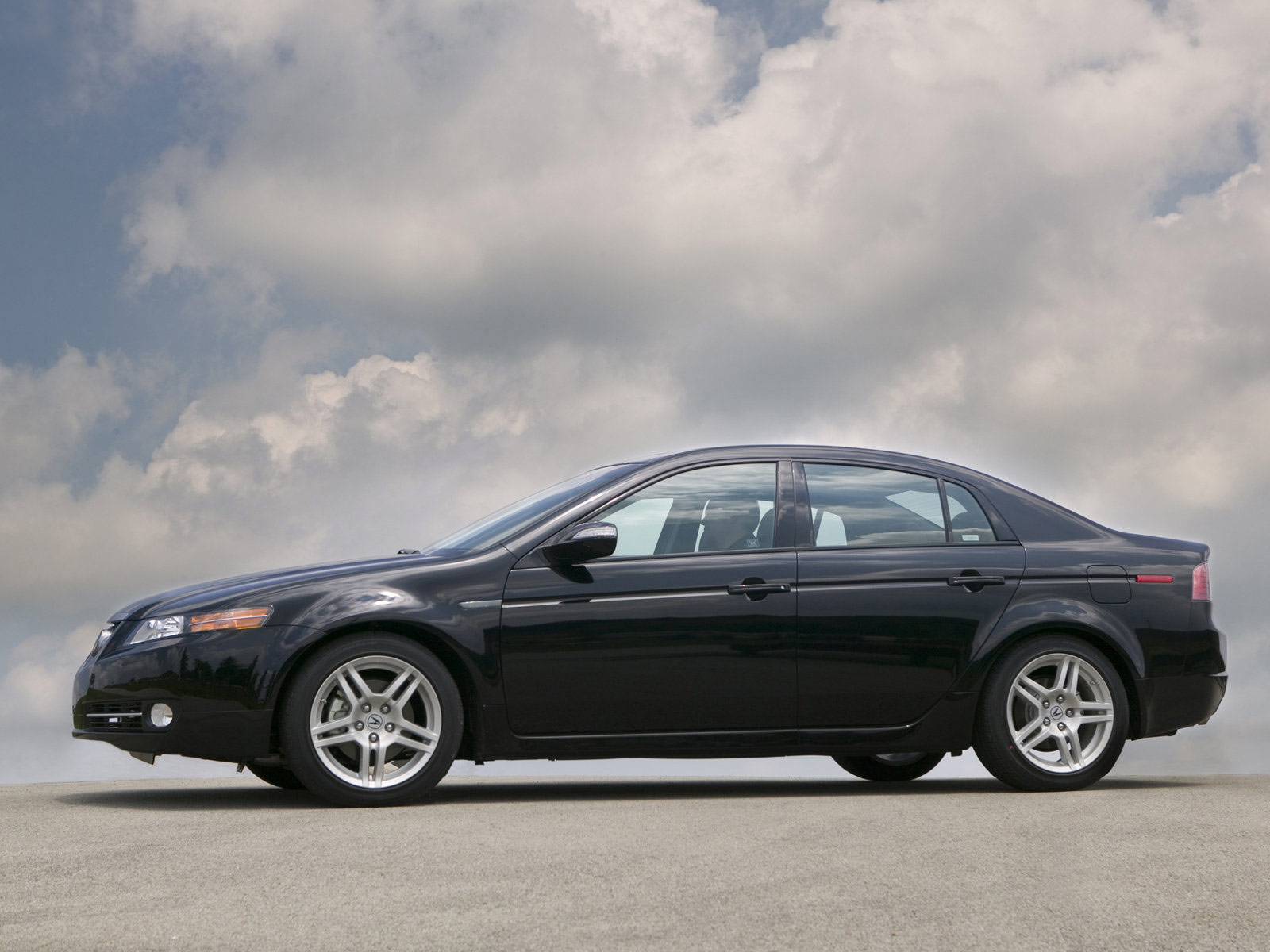
2007 ACURA TL
Click Thumbnail to download (size 1600 x 1200 pixels)


Acura TL

Body

For 2007, the Acura TL's exterior has been updated to enhance its emotional and athletic impact. With the introduction of the Type-S, visual cues were incorporated to distinguish it from other TLs. All the updates were done while maintaining the high build quality, durability and resale value that Acura buyers expect.

The TL was designed to embody aggressiveness and power, agility and endurance. Designers began with the stance of the vehicle-how it looks and sits on its suspension. They worked towards a look of poise, with a promise of agility and power. The contrast of muscular tension and angular lines flows through the sheet metal, with its long wheelbase, short front and rear overhangs and wide track setting the tone.

The 2004 TL design team were, in part, influenced by "Bauhaus" styling themes. Founded in 1919, Bauhaus was the first and most famous German design house. Bauhaus set a template for European design with the now-famous maxim, "Form follows function." That classic design logic meshes well with already established Acura design philosophies.

With the updates for 2007, the style could more accurately be called "Bauhaus with attitude." Careful attention was paid to give the Type-S its own distinctive and even more aggressive look. Black chrome trim used around the car is an excellent example of the difference between the TL and the Type-S.

The design features and changes include:

Front
    * Aggressive front fascia, a new larger grille opening, larger "A" mark and honeycomb mesh
    * Redesigned bumper with satin chrome crossbar and horizontal trim
    * New headlight clusters with daytime running lights (DRL) on innermost lens
    * New auto-on and auto-off headlights (previously auto-off only)
    * Fog lights repositioned from headlight cluster to lower valance

Side
    * New, split 5-spoke alloy wheels in Blade Silver finish
    * New exterior mirrors with integrated turn signal lights

Rear
    * New rear bumper design
    * Redesigned LED taillight clusters
    * New italicized TL logo

Type-S Exclusive Features
    * Black chrome grille trim (satin chrome on TL)
    * Redesigned bumper with black chrome crossbar and horizontal mesh trim
    * Pronounced "splitter" lip on front valance
    * 10-spoke alloy wheels in Dark Euro Silver
    * Smoked rear side marker lights
    * Wider, more aggressive side sill moldings
    * Exclusive rear bumper with trunk lid spoiler diffuser
    * Redesigned and unique lower valance
    * Large diameter quad exhaust finishers
    * Black chrome taillight trim
    * New Type-S logo

Interior
The Acura tradition of interior prestige and tailored function continues with an elegant and sporty interior for the TL. The instruments and controls are arranged to create an intimate and functional driver's cockpit that offers a feeling of connection and control. With its higher belt line, the TL has a substantial look and feel. Fine interior materials such as leather trimmed seats and real metal trim combine with close attention to detail and finish to give the TL a tangible feeling of elegance. The large interior has stylish and highly supportive seating and generous front and rear headroom.

The long TL standard feature list includes items like the first North American application of a standard Sound System with 6-disc CD, DVD-Audio, DTS(R) and Dolby(R) Pro Logic(R) II audio system that takes advantage of the latest technology to deliver sound resolution that's 500 times higher than conventional CD audio. XM(R) Satellite radio is also on the standard equipment list, as is a new MP3 player jack in the center armrest storage bin. The standard Acura HandsFreeLink(TM) system lets the driver dial a Bluetooth(TM)enabled mobile phone by voice, while a new, higher-resolution Multi-Information Display (MID) shows mobile phone data, tracks the car's maintenance needs, displays warnings and offers an array of driver preference settings. The available Acura Navigation System with Voice Recognition has a large 8-inch display with a new, redesigned interface and AcuraLink(TM) satellite communication system with Real-Time Traffic.

All TLs receive many updates to their interiors for the 2007 model year. Instrumentation, leather trim, accent trim and Active Noise Cancellation in the Type-S are all part of the driving experience of the 2007 TL.

Additionally, there are distinct styling differences between the TL and Type-S models. In addition to red ambient lighting (instead of the blue on TL models) the Type-S receives carbon fiber trim in place of wood, paddle shifters on automatic-equipped models, more highly bolstered front seats, stainless steel sport pedals, contrast stitching on the door panels, seats and steering wheel, and an available 6-speed manual transmission.

Styling
The TL interior has a dynamic and distinctive look, yet upholds the longstanding Acura tradition of highly functional driving environments. Given the sharp handling agility and power built into the TL, its interior echoes a clear sporting message. Fine details and rich surface finishes make it clear that the TL has not strayed from its luxury roots. Sweeping aluminum-alloy accents with a new pattern for 2007 wrap around the doors, flow onto the instrument panel and dive down the center console. Wood patterned accents warm the interior in the TL, while Type-S models have carbon fiber-look accents and contrast stitching on the door panels, seats and steering wheel, which creates an edgy look.

At night, the TL interior is transformed by new ambient lighting. The TL is bathed in a subtle blue light that coordinates with the instrumentation lighting, switchgear, and accent lighting, including the new footwell lighting. On the Type-S, red lighting replaces the blue, reinforcing its role as the enthusiast model.

Driver-Oriented Cockpit
The TL interior puts all important systems and controls within easy reach of the driver. The systems used most frequently-audio, cruise control, Acura HandsFreeLink(TM) and Acura Navigation System with Voice Recognition(TM)-have satellite controls positioned on the new 3-spoke steering wheel, leather-wrapped on Type-S. The new instrumentation is backlit and easy to read, and the displays have an uncluttered look and intuitive operation. The Multi-Info Display has been redesigned with higher resolution for better readability. Helpful features make driving easier, like power rearview mirrors that can be set to automatically tilt-down when reverse is engaged to make parking simpler.

With a driver's 8-way power seat and a tilt/telescoping steering column, it's easy to get comfortable in the TL. The one-touch moonroof switch is located in the overhead console. The Sequential SportShift selector features an intuitive interface for ease of use. The short-throw, close ratio 6-speed manual gearbox falls naturally to hand, and the shift knob and console-mounted parking brake lever are covered in a new textured leather. There is also a bottom-hinged throttle pedal with a more linear feel and natural motion. The Type-S features sporty-looking stainless steel pedals and a new carbon fiber-look automatic transmission shift knob in addition to the steering wheel-mounted paddle shifters.

Safety
The 2007 TL and TL Type-S were developed to help protect its occupants with a comprehensive array of safety technologies, high-grade materials and advanced construction techniques.

Weight sensors are incorporated in the front passenger seat to determine the total weight on that seat. If it is less than 65 pounds (as if occupied by a small child or car seat) the front airbag will not deploy and a warning message appears on the instrument panel. For the driver, a position sensor in the seat determines how the airbag will be deployed in the event of a frontal collision. If the seat is close to its forwardmost position, the front airbag is designed to deploy in the dual-stage mode. Otherwise, the airbag deploys in either single or dual-stage mode based on the severity of the collision and seat belt use.

The TL and TL Type-S also feature adjustable rear outboard head restraints, and standard side curtain airbags. These technologies, and the use of high-tensile steel in critical areas and computer-modeled crush zones, help to ensure a high level of passenger protection. The TL passed the toughest government safety tests with a 5-star frontal rating in addition to achieving a "GOOD" rating in all categories evaluated during the IIHS frontal offset collision. The TL safety equation even extends to pedestrians with structural elements designed to reduce the likelihood of serious injury in a collision.


Powertrain
Two engines are available for the 2007 TL. Under the hood of the TL is an all-aluminum 3.2-liter V-6 with 24 valves and Acura's VTEC(R) - Variable Valve Timing and Lift Electronic Control system. It delivers 258 horsepower and 233 lb-ft of torque.

The TL Type-S is powered by a modified version of the 3.5-liter VTEC V-6 found in the Acura RL. With more displacement than the TL engine and a high-flow exhaust system, it boasts 286 horsepower and 256 lb-ft of torque.

Both engines benefit from Acura's groundbreaking VTEC system. This patented technology provides an exceptionally flat torque curve, enhancing high-rpm horsepower without sacrificing low-end torque. The result is an engine with excellent responsiveness at all engine speeds.

The standard transmission in the TL and TL Type-S is an all-new electronically controlled 5-speed automatic. Developed from the RL's 5-speed automatic, this transmission has more torque capacity that the one it replaces, but more compact. It also features Acura's Sequential SportShift system. Inspired by Formula One(R) racecars, Sequential SportShift gives the driver the flexibility of a self-shifting automatic or the control of a manual. The system has been reprogrammed this year for smoother operation and enhanced gear holding capabilities. In addition, the TL Type-S "rev matches" during manually selected downshifts.

Available on Type-S models is a smooth-shifting 6-speed close-ratio manual transmission. Similar to the manual transmission on the 2006 TL, it features a re-designed bellhousing and improved clutch feel for smoother, more linear engagement.

With Acura's unwavering commitment to the environment, both TL engines meet strict CARB LEV-II ULEV standards. In addition, cold-start emissions are improved thanks to the close-coupled catalytic converter system and under-floor catalyst.

TL Engine
    * 3.2-liter SOHC V-6 aluminum alloy engine
    * 258 hp at 6200 rpm and 233 lb-ft of torque at 5000 rpm
    * Variable Valve Timing and Lift Electronic Control (VTEC(R))
    * Dual-stage induction system with lightweight magnesium intake manifold
    * Cold-air intake system
    * Computer-controlled Programmed Fuel Injection (PGM-FI)
    * Direct ignition system
    * Compact in-head exhaust manifolds
    * High flow close-coupled catalytic converters plus under floor catalytic converter
    * High capacity 32-bit RISC processor engine control unit
    * 105,000 mile tune-up intervals

TL Type-S Engine
    * 3.5-liter SOHC V-6 aluminum alloy engine
    * 286 hp at 6200 rpm and 256 lb-ft of torque at 5000 rpm
    * Variable Valve Timing and Lift Electronic Control (VTEC(R))
    * Dual-stage induction system with lightweight magnesium intake manifold
    * Cold-air intake system
    * High flow, sport tuned exhaust system with quad finishers
    * Computer-controlled Programmed Fuel Injection (PGM-FI)
    * Direct ignition system
    * Compact in-head exhaust manifolds
    * High flow close-coupled catalytic converters plus under floor catalytic converter
    * High capacity 32-bit RISC processor engine control unit
    * 105,000 mile tune-up intervals

5-Speed Automatic Transmission
    * All-new compact design w/ high torque capacity
    * More compact design
    * Sequential SportShift re-programmed to allow quicker, more positive downshifts and upshifts (Type-S only)
    * Improved coordination between Drive-by-Wire(TM) throttle system and transmission for smoother shifts
    * Steering wheel-mounted F1(R)-style Sequential SportShift Paddle Shifters (Type-S only)
    * External transmission fluid cooler (Type-S only)
    * Advanced shift-hold control limits up-shifts during spirited driving
    * Advanced Grade Logic Control System reduces gear "hunting" when driving on steep hills
    * Linear solenoid direct-acting control reduces shift shock and improves smoothness
    * Lockup torque converter design for superior fuel economy

6-Speed Manual Transmission (TL Type-S only)
    * Close ratio spacing for maximum performance
    * Multi-cone synchronizers (first through fourth gears)
    * Reverse lock-out feature prevents accidental engagement
    * Lightweight high-pressure-cast aluminum-alloy transmission housing
    * Improved clutch feel for smoother engagement
    * Advanced clutch torsion mechanism reduces gear noise
    * Helical gear limited-slip differential reduces wheel spin and maximizes acceleration

Emissions/Fuel Economy
    * Meets CARB LEV-II ULEV standard
    * TL EPA fuel economy 20/29 mpg (city/highway)
    * TL Type-S EPA fuel economy 19/28 mpg (AT) and 20/29 (MT)
    * High flow close-coupled catalytic converters plus under floor catalytic converter
    * High capacity 32-bit RISC processor engine control unit

Noise Vibration and Harshness (NVH)
    * Highly rigid aluminum-alloy block with cast-in iron cylinder liners
    * 60-degree V-angle for inherently smooth operation
    * Dual-mass flywheel (6 MT) reduces driveline noise and vibration
    * Automatically tensioned, maintenance-free serpentine accessory drive


Auto Insurance Information
Got 15 Minutes? Get a Car Insurance Quote.
geico.com

Maybe you've heard something about saving 15% or more on your car insurance policy. Maybe you've succumbed to the charms of an eloquent little gecko®. No matter how you found us, you're in the right place to get a fast, free, and accurate quote on GEICO car insurance.

Get an online auto insurance quote anytime. If you like what you see, you can purchase immediately and start enjoying GEICO's top-notch coverage. Got questions? Contact us 24 hours a day at: 1-800-861-8380.


Japanese car photos, ACURA  pictures, wallpapers

Sunday, July 22, 2012

2012 Toyota 86 GTS Car Insurance Information

2012 Toyota 86 GTS
Japanese car photos, TOYOTA pictures, wallpapers
- Car insurance information - Car specifications - Car accident lawyers -


2012 Toyota 86 GTS

Click Thumbnail to download (size 1600 x 1200 pixels)


Toyota 86 GTS

Toyota Australia has dramatically redefined the concept of an affordable sports car with the arrival of its eagerly awaited Toyota 86 coupe.

Designed to delight driving enthusiasts, the compact and aerodynamic four-seater sports car is priced from an amazingly low $29,990.

The 86 marks a return to Toyota's sporting roots with the world's only combination of a front-mounted, free-revving, horizontally opposed "boxer" petrol engine and rear-wheel drive.

This unique powertrain format, combined with a compact design, light weight and a low centre of gravity, produces the best possible power-to-weight ratio.

These attributes will reward 86 owners with maximum driving pleasure - lively, accessible performance and highly engaging dynamic abilities with minimal electronic intrusion.

Toyota Australia's executive director sales and marketing Matthew Callachor said Toyota was determined to ensure the great handling and performance of the 86 would not come with a hefty price tag.

"The 86 is meant to be enjoyed by as many driving enthusiasts as possible, and our pricing will extend its appeal to people who never imagined they could afford such a fun car," Mr Callachor said.

"Toyota has created something that people have wanted, but didn't exist - a compact, light, basic sports car with balance and handling rated in the same league as some legendary sports cars," he said.

"The 86 will serve as a halo car for Toyota, expanding the brand into a new dimension of driving performance.

"It is a game-changer, demonstrating Toyota's commitment to 'waku doki' - designing and engineering cars that really get your heart pumping."

The 86 is the result of a joint development between Toyota and Subaru, bringing together the best of each company's technical know-how and their mutual passion for sports cars.

The stylish four-seater draws on Toyota's sports-car heritage - including the Supra, MR2, Celica GT-Four and the legendary 2000GT - to create a strong emotional connection between driver and car.

Toyota is offering the 86 in two grades - GT and GTS - both powered by a newly developed 2.0-litre flat-four engine that revs freely to 7,450rpm and has a high compression ratio of 12.5:1.

Toyota's D-4S direct-injection technology increases throttle response, power and torque over a wide range of engine speeds without sacrificing fuel efficiency and environmental performance.

Maximum power of 147kW - equivalent to 100hp per litre - and peak torque of 205Nm ensure brisk and engaging performance.

The flat-four engine combines with the lowest driver hip-point of any Toyota production vehicle, 400mm, to give the 86 an ultra-low centre of gravity of just 460mm - in the league of cars such as the Porsche Cayman.

Both the powertrain and driving position have been set as low and as far back as possible to optimise balance, giving the car a near-perfect 53:47 weight distribution.

Fuel economy is remarkable for a sports car - 7.8 litres/100km for manual variants - and even better for automatic versions at just 7.1 litres/100km.

CO2 emissions are 164 grams/km (auto) and 181 grams/km (manual).

Comprehensive weight-saving measures, resulting in a kerb weight of just 1,222kg, have contributed to handling and economy as well as a power-to-weight ratio of 120kW/tonne.

The Toyota-designed six-speed manual gearbox offers quick, precise shifting through closely stacked ratios and a tactile "flick-of-the-wrist" short-throw lever.

A new Lexus IS-F-inspired six-speed automatic transmission, with shift paddles mounted on the steering wheel, combines direct response with an extremely fast shifting speed of only 0.2 seconds.

A blipping downshift control automatically revs the engine for extremely smooth and rapid changes down through the gears.

For added driver enjoyment, the smooth-revving engine sound is channelled directly into the cabin via a sound generator - the first system of this type to be used in a Toyota.

Power is distributed to the rear wheels via a Torsen limited-slip differential (except in auto GT), optimising traction and grip under all driving conditions.

The 86 features an aerodynamic and stylish body design built around a low, highly compact chassis for optimum handling and performance.

It has a well-planted, sporting stance: it is wider than a Toyota Rukus, its overall length and wheelbase are shorter than a Corolla hatch, and its roof height is lower than a three-door Yaris.

Standard equipment includes seven airbags, a five-mode stability control system, traction control, anti-skid brakes, 16-inch alloy wheels, cruise control, air-conditioning, CD sound system, daytime running lamps (DRLs) and a multi-information display.

The Toyota 86 GTS has 17-inch alloy wheels, a 6.1-inch display screen, satellite navigation with live traffic updates, auto-levelling HID headlamps, leather-accented front seats, dual-zone climate-control air-conditioning, aluminium pedals, LED DRLs and red stitching highlights.

The GTS is priced from $35,490. Automatic transmission costs an extra $2,500 on both grades.

Toyota has enhanced the unique identity of its new sports car by creating a subtle yet distinct T-mesh pattern in the front grille, door-switch base, instrument panel, meters, triangular rear-centre foglamp and spare-wheel cover.

The 86 also incorporates numerous exclusive sporting details through both the exterior and interior, including a conrod motif to the HID headlamps, twin exhausts, instrument dials, air vents and gear-lever base.

Mounted on the car's front wing is the 86 piston logo, based on the car's unique front boxer engine, rear-wheel drive powertrain format.

It also represents the vehicle's tyres sliding in a four-wheel drift, highlighting the perfect on-the-limit balance of the 86.

Toyota 86 inspired by 50-year sports car heritage

Toyota has a 50-year history of creating exciting driver-focused sports cars that have proven popular with the public and successful in competition.

The new Toyota 86 captures the best elements of three key models from that rich heritage: the Sports 800, 2000GT and AE86.

It also revives Toyota's passion for sports cars: not just on racetracks but on the road as well, with models such as the Supra, MR2 and Celica GT-Four.

Like all these classic Toyota sports cars, the 86 delivers pure driving pleasure and creates a strong emotional connection between driver and car.

While the 86 is being launched as the world's only car with a front-mounted horizontally opposed engine and rear-wheel drive package, it is not the first.

That honour goes to the Sports 800, an inexpensive and easy-to-drive sports car that Toyota began developing in 1962 with a 790cc two-cylinder horizontally opposed (boxer) engine.

The combination of its boxer engine, lower centre of gravity, front-engine and rear-drive (FR) layout provided the Sports 800 with great handling and excellent fuel efficiency, enabling it to achieve success in endurance races.

The 86 has adopted this classic architecture to provide maximum driving enjoyment.

The beautiful 2000GT, a 2.0-litre straight-six coupe first displayed at the 1965 Tokyo Motor Show, helped establish the company's global reputation.

During development of the 86, chief engineer Tetsuya Tada placed a 2000GT in the studio next to the designers' clay model.

The result is that the 86 is infused with the character of the 2000GT - especially the graceful side-window shape, long bonnet and rear fender line.

Similar to the collaboration with Subaru on the 86 project, the 2000GT was jointly developed with Yamaha Motor Co., which tuned the engine and assembled parts.

The Corolla Levin AE86's FR powertrain, responsive and high-revving engine, compact dimensions, light weight, good balance and power-to-weight ratio made it a popular choice for rallying and circuit driving - and more recently in drifting.

The new 86 recaptures the spirit of the AE86 by delivering exhilarating driver involvement in an affordable compact car that evolves with its owner.

The 86 also remains faithful to Toyota's long sports-engine history with the boxer engine having a square bore and stroke set-up of 86mm x 86mm.

The legendary 3M engine of the 2000GT and the 1G engine of the Supra were both in-line six-cylinder configurations with a square bore and stroke of 75mm.

The in-line, four-cylinder unit in the Celica and MR2 had a square bore and stroke of 86mm.

The passion of two companies

The development of the 86 brought together the technical know-how and shared passion for sports cars of two great companies, Toyota and Subaru.

The "dream" project was initiated by Toyota to revive its sports car heritage and, once again, deliver the fun of driving to as many people as possible.

Toyota invested in Subaru's parent company, Fuji Heavy Industries, in 2005 and lifted its shareholding in 2008 to more than 16 per cent.

Around this time, Toyota's product planning and product management divisions aggressively promoted the concept of a sports car with a horizontally opposed engine with a front-engine, rear-drive (FR) layout.

Mr Futoshi Ito, general manager of Toyota's strategic product management, said: "In 2006, we began considering how we could create a symbol of the two companies' alliance.

"In the end, if we were going to get involved in a joint development project with Subaru, people asked what could be more natural than to create an FR layout with a horizontally opposed engine.

"I worked out a basic approach for our joint project with Subaru wherein Toyota would be responsible for vehicle planning and design development, and Subaru would be responsible for the actual development work."

Toyota designers went beyond their normal domain and became involved with design engineering as well, according to Mr Takayasu Furukawa, who directed the exterior design effort.

"For example, the radiator in the initial package was mounted vertically. But keeping the bonnet low was a key priority for us, so we issued an order for the radiator to be angled and kept low by whatever means necessary," he said.

Mr Toshiaki Noda, a senior Toyota engineer who directed development of the new car's body, said the body design process involved overcoming the unknowns imposed by collaboration between two companies with different cultures.

"We, as team members, were products of different histories and cultures, but we shared a desire to create the ultimate sports car.

"You could say that the design of the 86 is the crystallisation of both our companies' passion," Mr Noda said.

Toyota 86 chief engineer Tetsuya Tada stunned Subaru when he announced targets that included a naturally aspirated, high-revving sporty engine capable of developing 100hp per litre while also achieving good fuel economy.

Mr Tada sought advice from Mr Takamitsu Okamoto, who led engine development for the Lexus LFA, and he advised a redline around 7,600rpm and a bigger bore than the 84mm proposed by Subaru.

After some animated discussions within Toyota, it was decided to combine Toyota's D-4S direct-injection know-how with Subaru's engine, and to reconfigure the engine from the bore and stroke proposed by Subaru.

This decision was extraordinary because it would require disclosing to Subaru all Toyota's technical information related to the next-generation D-4S, which was still under development.

Mr Motoki Ohtani, who worked on D-4S for Toyota, said: "It was a major decision that involved both companies sharing their crown jewels. It must have felt like a real leap in the dark."

The resulting joint development involved Subaru engineers setting up shop at Toyota at one point, and Toyota engineers setting up shop at Subaru at another.

The prototype engine with the next-generation D-4S achieved the 100hp per litre output goal on its first bench test, revving smoothly beyond 7,000rpm.

"That's when we all breathed a little easier," said Hirohisa Kishi, general manager of Toyota's engine control system development division. "I guess you could say it's when we began to trust one another."

The project was also characterised by a meticulous focus on the transmissions.

Subaru had not developed a suitable unit for an FR-layout vehicle, so Toyota redesigned an existing six-speed manual transmission.

Development work was performed by both Subaru and Aisin, but the process ran into unexpected difficulties.

With just one year to go before production was due to begin, the team had still not achieved the ideal six-speed manual transmission feel.

The team virtually poured in engineers from Toyota, Subaru and Aisin, creating five different prototypes and making major design changes to shorten the shift stroke without creating an unacceptably heavy feel.

Another team developed a six-speed sport automatic transmission based on Toyota technology, achieving an extremely fast shift speed of two-tenths of a second.

Toyota provided the hardware and the basics in terms of expertise, technology and control while Subaru added the right "flavour" - control that was specialised for the driving experience.

In striving to deliver the ideal FR sports car, a single prototype was built by hand - shortening the wheelbase of an existing sedan and combining a horizontally opposed engine with an FR layout.

It demonstrated the car's potential and convinced executives from both companies that the project could be successful.

To promote a shared understanding of the team's goals, Toyota members were forbidden from driving the car alone.

They had to bring Subaru people with them so they could convey their thoughts about the vehicle. Even at the Nurburgring, they had to ride in the car together.

Engineers, as with any car, established objectives for individual aspects of the vehicle's performance, such as driving stability and ride comfort.

However, the emphasis was on harmony - if one aspect of performance stood out from the rest, the two companies worked to raise the others.

As a result, Toyota and Subaru succeeded in contributing all of their resources to the 86 development project.

The benefit of this synergy is described as: 1+1=3.

Toyota 86 is well specified

Toyota's new 86 sports car is offered in two model grades - 86 GT and 86 GTS - with the choice of six-speed manual or six-speed direct-shift automatic transmissions.

All four models have the 2.0-litre D4-S "boxer" type engine and are well specified.

Both grades have a comprehensive safety package, including seven SRS airbags, ABS brakes with electronic brake-force distribution and brake assist, traction control, vehicle stability control with sports mode and a lever-type parking brake.

Standard equipment also includes air conditioning, tilt and telescopic steering wheel adjustment, cruise control, CD tuner with Bluetooth™, voice recognition and AUX and USB inputs, multi-information display, walk-in passenger's seat, united folding rear seat-back and power windows with auto up/down.

The 86 GT also has an analogue speedometer, premium three-spoke steering wheel, shift lever and shift knob, and urethane-covered parking brake lever.

The 86 GT exterior includes 16-inch alloy wheels (with full-size steel spare wheel), daytime running lamps, halogen headlamps, UV-cut glass, power-folding mirrors and rear foglamp.

The manual transmission GT 86 has a limited-slip differential.

The Toyota 86 GTS has 17-inch alloy wheels with full-sized alloy spare wheel, and a limited-slip differential on manual and automatic models.

Additional equipment on the high-grade model includes auto-levelling HID headlamps with integrated daytime running lamps, windscreen top shade, front foglamps and smart entry/smart start.

Inside, Toyota 86 GTS has the additional features of leather-accented front seats with Alcantara® fabric inserts, front-seat heaters, dual-zone auto climate-control air conditioning, aluminium pedals and door scuff plates.

It also has a premium three-spoke steering wheel and parking brake lever, premium (carbon-look) instrument panel finish, frameless interior rear-view mirror and red stitching interior highlights.

The Toyota 86 GTS audio head unit includes 6.1-inch LCD touch screen, satellite navigation with 3D map display, RDS-TMC (SUNA) traffic information and safety camera warning, SMS and email text to voice, FM radio text and SD card slot.

The steering wheel in GTS 86 automatic has paddle shifters.

The speedometer in GTS 86 is digital, with premium T-mesh finish.

Toyota 86 engine is all new

The Toyota 86 sports car engine is all new and combines the leading-edge technologies of Toyota and Subaru.

The two-litre engine is Toyota's first volume-production four-cylinder horizontally opposed engine, helping to give 86 its low centre of gravity.

It has the highest specific power output and the highest operating revolutions in the Toyota range.

It delivers 147kW of power at 7,000rpm and 205Nm of torque at 6,400 to 6,600rpm on 98-RON fuel, with a maximum engine speed of 7,450rpm.

Toyota chose natural aspiration for 86 to optimise acceleration response - the 'connection' between throttle application and power to the rear wheels.

The engine follows the tradition of successive Toyota sports car engines of 'linear power delivery up to redline speeds' coupled with environmental friendliness.

It has a 'square' bore and stroke relationship of 86mm by 86mm for a combination of optimum balance, high power and torque, high revolutions and optimum fuel economy.

The compression ratio is 12.5:1 for maximum performance across the revolution range.

Special features include a system to optimise the engine induction sound heard in the cabin, creating a linear intake sound in response to throttle application.

The intake system includes a sound creator and a damper, with a thin rubber tube to carry intake pulsations to the cabin.

When the intake pulsations reach the sound creator, the damper resonates at certain frequencies to optimise the intake sound heard within the cabin.

Various sound levels are produced, based on the driver's throttle inputs.

City driving produces a pleasant, stress-free sound, while wide-open throttle acceleration produces a true sports-car sound.

The engine has a 'boxer' type crank pin arrangement in which the opposing pistons move in and out together.

The crank pins are 50mm in diameter for optimum rigidity at high engine speeds.

Specifications such as the big-end bearing bolt size were reviewed according to the newly designed crank pin to ensure reliability at high revolutions.

To raise the revolution limit the connecting rod shape and piston length have been optimised and the piston weight has been minimised.

Toyota 86 is first with dual injection

The two-litre horizontally opposed four-cylinder engine in 86 is the first in the world to combine Subaru's traditional 'boxer' layout and Toyota's unique D-4S dual injection system.

The new 86 is the first Toyota in Australia with the D-4S system (Direct-injection 4-stroke gasoline engine Superior version), for optimum performance and fuel economy.

The Toyota D-4S system combines high-pressure direct injection into the combustion chamber and port injection into the intake port.

It mixes and matches fuel delivery from the two sets of injectors to provide the ideal fuel/air mixture for all engine-load conditions.

The D-4S system boosts performance across the revolution range compared with a port-injection engine, boosting power by up to 10kW and torque by up to 20Nm.

The two injection systems have their own fuel supply systems: low pressure for the port injectors and high pressure for the direct injectors.

Both systems are used when the engine is running under medium-to-high load at lower engine revolutions.

This creates a homogeneous air-fuel mixture to stabilise combustion, improve fuel efficiency and reduce emissions.

In high-load situations the engine uses the direct injection system only, taking advantage of the cooling effect of injecting fuel directly into the combustion chamber, and as a result improving the efficiency of each charge.

The precise injection control also allows for a high compression ratio (12.5:1 in Toyota 86) by reducing the chance of pre-ignition or detonation.

When the engine is cold, the injection system uses both sets of injectors to ensure quick warm-up of the catalyst and therefore achieve optimum purification of exhaust emissions.

Two transmissions for Toyota 86

Toyota 86 has the choice of two new transmissions developed by Aisin, part of the Toyota group of companies.

The two transmissions are a six-speed manual and a six-speed sequential automatic with Lexus IS F technology, including highly responsive direct shift and automated throttle blips for down changes when in Sport mode.

Both are matched to a performance 4.100:1 final drive ratio.

Toyota 86 GT manual and both 86 GTS models have a Toyota-produced Torsen limited-slip differential.

The Toyota 86 GTS automatic has the added feature of steering-wheel mounted paddle shifters.

The six-speed manual transmission is all new and designed for crisp movement and a precise, exhilarating shift feel.

It has a short-throw shift lever and triple-cone synchromesh on the first three gears, for smooth shifting and increased durability.

The manual transmission has a lightweight alloy bell housing and a smooth yet firm operation feel without unpleasant stiffness when gears engage.

The gear-ratio spread combines driving and environmental performance, with ratios of: first, 3.626; second, 2.188; third, 1.541; fourth, 1.213; fifth, 1.000; sixth, 0.767; and reverse, 3.437.

The Toyota 86 automatic transmission provides direct, agile shifting - including IS F-style direct shift.

Advanced transmission electronics provide for manual (M mode) shifting, auto-blipping on down changes and flex lock-up to save fuel.

Flex lock-up is enabled from low speeds to provide a direct shift feeling with agile driving, while also minimising friction losses for improved fuel economy.

Off-throttle flex lock-up has been adopted to expand the fuel-cut range to include lower vehicle speeds, further increasing fuel economy.

Toyota 86 drivers can use the downshift paddle shift in D-mode to increase engine braking.

The 86 automatic transmission has Sport and Snow modes.

It is water-cooled for increased reliability and durability.

The ratios were chosen to combine strong acceleration from low speeds with excellent fuel economy when cruising.

The ratios are: first, 3.538; second, 2.060; third, 1.404; fourth, 1.000; fifth, 0.713, sixth, 0.582; and reverse, 3.168.

Sport/Snow modes

Sport mode enables torque-converter lock-up from lower speeds, for more direct acceleration and shift feeling.

It also heightens gear-change responsiveness and maximises acceleration in each gear.

When combined with D-range, it prioritises vehicle response to driver throttle input.

In M-range, it provides an even higher level of sporty driving.

Snow mode adjusts throttle-valve opening to control acceleration characteristics on low-grip surfaces.

Toyota 86 instruments put emphasis on tacho

The instruments in Toyota's new 86 were designed with the tachometer in the centre, for sports-oriented driving.

There are grade-specific analogue instrument clusters for new 86 GT and 86 GTS.

Both feature a three-ring design, with a central tachometer and multi-information display in the tachometer dial.

The Toyota 86 GT instruments include shift position display for both manual and automatic transmissions, as well as VSC Sport indicator.

The manual shift position has been included as an aid to environmentally friendly driving; it flashes three times at the optimum up-shift point to help save fuel.

The Toyota 86 GTS cluster has the added feature of a digital speedometer in the tachometer dial, so the driver can see both engine revolutions and road speed at a glance.

In addition, Toyota 86 GTS has the unique feature of rev/red zone indicator, which can be linked to a warning buzzer set by the driver.

The multi-information display includes odometer, two trip meters, outside temperature, instantaneous fuel economy, average fuel economy, and (on 86 GTS) rev indicator setting.

Chassis tuned on Prius tyres

The Toyota 86 chassis and suspension geometry have been tuned on Prius tyres so that enthusiasts will be able to appreciate the benefits of fitting their own high-performance tyres.

Chief engineer Tetsuya Tada said the tyre on the world's best-selling hybrid strikes a great balance between performance, comfort, economy and safety.

"The dynamic potential of the 86 should not rely on high-performance tyres," Mr Tada said.

"While the tyres fitted to the 86 are not actually from Prius, we tuned the car using Prius tyres to find the maximum potential of the chassis and suspension.

"The Prius tyre has very neutral and predictable properties where the increase in cornering force is linear to the increases in steering angle and load transfer to the front axle.

"Ensuring the vehicle handles well on Prius tyres means that customers who opt to buy high-performance tyres will be pleasantly surprised at the net performance gain.

"This decision means the chassis is buttoned-down from the factory while - in keeping with the car's philosophy - leaving plenty of room for customisation by its owners."

Mr Tada said that, whenever a new vehicle was developed, a tyre was chosen to match the car's characteristics.

"With that in mind, we tuned the chassis and suspension geometry for the 86 for use with Prius-specification tyres.

"Having a base chassis and suspension tuned to be neutral and predictable allows the 86 to readily accommodate a wide variety of tyres."

All four 86 variants are also fitted with a full-size spare tyre.

Lightweight wheels for 86

Toyota's 86 is fitted with the lightest production 16-inch and 17-inch cast aluminium wheels Toyota has ever produced.

The new 16 x 6.5J and 17 x 7J wheels have sharp spoke designs with bright machine-finished highlights that create a mechanical, sports-inspired image.

By machine-cutting a section of the painted face, the wheels display the natural bright finish of aluminium.

The 16-inch wheels on the 86 GT are the lightest at just 7.21kg and feature a simple 10-spoke design.

The high-grade Toyota 86 GTS has 17-inch wheels with five machine-finished twin spokes, offset by five single dark-accented spokes to provide fine detail.

All wheels feature a small centre ornament to emphasise the spoke length.

They are designed for optimum rigidity and functional appeal while minimising unsprung weight to ensure the vehicle maintains optimum contact with the road at all times.

A full-size spare tyre is standard - steel for the GT and alloy for the GTS.

Toyota 86 has two brake packages

New Toyota 86 has two grade-specific brake packages to suit the 16-inch wheels on 86 GT and 17-inch wheels on 86 GTS.

86 GT has 277mm diameter ventilated front discs and 286mm diameter solid rear discs.

High-grade Toyota 86 GTS has 294mm diameter ventilated front discs and 290mm ventilated rear discs.

Both have aluminium callipers and a lever-type parking brake.

The brake response and vacuum booster have been fine-tuned to provide precise brake modulation.

Toyota 86 suspension provides excellent response

Toyota 86 was designed for high levels of handling, stability and steering response.

It was benchmarked against Porsche Cayman during development with a view to providing quicker lateral-force response and stability, a smaller roll angle and smaller steering angle.

Toyota 86 has a direct steering feeling on country roads and highways, with sharp steering, low body roll and high levels of grip.

Toyota 86 has MacPherson-strut front suspension with an all-new L-shaped lower-arm design and double-wishbone rear suspension.

It has electric power-assisted steering with a 13.12:1 steering ratio.

The foundations for Toyota 86's impressive steering and handling are its low centre of gravity (460mm above the road), centralised mass/low polar moment of inertia, and the strong yet lightweight body structure which provides a stable platform for the suspension.

In addition, 86 has a large footprint on the road for its overall dimensions, with a wheelbase of 2,570mm, front track of 1,520mm and rear track of 1,540mm.

Body rigidity has been optimised while meeting strict weight targets through extensive use of high-tensile and ultra-high tensile strength steel, and optimal use of strengthening brackets and gussets.

Reinforcements have been added to key points where load is transmitted from the suspension to the body, including the front side members and rear floor members.

A front-strut tower bar has been adopted as well as an aluminium engine under-cover to efficiently increase rigidity.

The 86 chassis-frame also has a rear top-mount reinforcement, rear-frame gusset between the rear frame and rocker panel, and a front lower member to reinforce the suspension.

The body rigidity structure around the front suspension also includes a top-mount reinforcement and a reinforced apron.

Front suspension

Toyota designed the 86 MacPherson-strut front suspension for the levels of handling stability owners expect in a "fun-to-drive" sports car.

The all-new design provides direct handling feel, sharp response and high levels of controllability.

It has coil springs, gas-filled dampers and a ball-joint mounted stabiliser bar.

The springs, dampers, stabiliser bar, steering knuckle and lower arm are all new designs.

Special attention was paid to optimising the rigidity of the front suspension mounting points and positioning those points to create a lower roll axis.

The struts are mounted as low as possible to achieve a low bonnet line (for improved aerodynamics) and a low centre of gravity.

The single L-shaped lower arms have been reverse-positioned (rear to front) compared with the conventional arrangement to allow the engine to be mounted lower and closer to the centre of the vehicle.

The steering box has been positioned behind the front cross-member.

The cross-member has in turn been specifically designed to fit the limited space between the boxer engine's oil pan and exhaust system.

Rear suspension

The purpose-designed double-wishbone rear suspension in the 86 provides agile stability and high levels of rear grip.

The roll axis has been tuned to compliment the front suspension while providing both the high level of roll rigidity expected of a sports car and the crisp turn-in of a front-engine/rear-drive sports car.

The 86 rear suspension has new designs for the rear sub-frame, coil springs, dampers, ball-jointed stabiliser bar, lower-arm rear and trailling link.

Special attention was paid to ensure optimum rigidity of the suspension mounting points.

A substantial rear sub-frame carries the rear suspension and the differential, to optimise suspension rigidity while minimising unsprung weight.

Toyota 86 is ultra-low, wide and compact

Toyota 86 features an aerodynamic and stylish body design built around a low, highly compact chassis for optimum handling and performance.

At 4,240mm in length the standard 86 is shorter than a Corolla Ascent hatch (4,245mm).

Its roof height of just 1,285mm is 225mm lower than the Toyota Yaris YR three-door hatch.

Its 2,570mm wheelbase is also shorter than Corolla Ascent (2,600mm).

However, at 1,775mm the standard 86 is wider than a Toyota Rukus (1,760mm), providing its squat, sporting stance.

Designers took advantage of the low centre of gravity afforded by the boxer engine and front-engine/rear-wheel drive layout to create the low, compact design.

The flat, low bonnet signals the presence of the boxer engine.

The bonnet has sharp, geometric surface styling above the headlamps and sweeping upward lines on either side that flow into the wheel arch profiles.

The large, low-set grille provides generous cooling to the front radiator and front brake callipers with a shape that provides a cue to Toyota's design identity.

The front grille also has distinctive T-mesh in place of conventional grille mesh.

Other design details point specifically to Toyota's legendary 2000GT sports car, including the distinctive side window graphic and flared wheel arches.

The rear wheel arches and trapezoid-shaped rear fascia give the 86 a wide, sporty stance at the rear.

Dual circular exhaust tips with a large, 110mm outer diameter provide an additionally dynamic appearance.

The front fenders each have the distinctive 86 emblem, which features opposed pistons to signify the boxer engine and an '86' in the middle with a design that evokes the image of a four-wheel drift.

The 86 GT comes with halogen headlamps as standard while high-grade 86 GTS has high intensity discharge headlamps and LED (light emitting diode) daytime running lights (DRLs).

The Toyota 86 GTS also has a headlamp washer and foglamps in the lower section of the front bumper.

On GT grade, DRLs are fitted in the same position as the foglamps on GTS.

Rear combination lamps with a 12-element LED tail and stop lamp and rear turn signal lamp (globe) are standard across both models.

Two reverse lamps and a foglamp are integrated in the rear bumper, and there is a four-element LED high-mount stop lamp in the rear shelf.

LED lamps provide high visibility, a cutting-edge appearance and use less power than traditional stop lamps.

The sides of the rear lamps also have aero stabilising fins, which contribute to overall aerodynamic performance.

The stay-type side mirrors of 86 have a compact and lightweight design.

As well as providing maximum rear visibility, the door-mounted position allows for high visibility around the A-pillars.

Toyota 86 is available in seven exterior colours: Pegasus White, Tornado Grey, Thunder Silver, Storm Black, Velocity Orange, Sonic Blue and Mount Fuji Red.

Toyota 86 aerodynamics provide stability and enhanced handling

The aerodynamic design of the Toyota 86 promotes agile handling at low to mid-range speeds and superior straight-line stability at high speeds.

An aerodynamic concept promotes stability by enveloping the car with air - above, below and along the sides.

This principle prevents unnecessary downforce that can affect fuel economy.

The 86 has a drag coefficient of 0.27.

The profile from the bottom edge of the low-set front bumper to the bottom edge of the side rocker enhances stability.

The bonnet surface is gently curved, which reduces drag and lift.

A pagoda roof design widens towards the rear of the car, which contributes to a lower roof and in turn provides handling stability.

The boot angle maximises airflow efficiency over the rear of the vehicle.

The upturned rear diffuser provides additional and effective downforce for enhanced handling.

Toyota 86 has smallest Toyota steering wheel

The new 86 has the smallest-diameter steering wheel in the Toyota range.

The three-spoke premium wheel has a 365mm diameter for quick steering inputs.

Grip on the wheel and thumb stability have been maximised through the design of the steering wheel cross-section, and verified by test drivers.

Concave-shaped grooved thumb rests are built into the inner circumference of the wheel.

The rim thickness and the size of the horn pad have been optimised to allow a clear view of the instruments.

The horn pad was designed with minimal offset towards the driver, to appear small when viewed from the front, optimise operability and create an easily recognised steering centre.

The '86' logo mark is embossed on the horn pad in place of a metal badge, to minimise light reflection and hence potential distractions.

Toyota 86 has electric power-assisted rack and pinion steering, with a quick 13.1:1 steering ratio.

The steering column has a tilt range of 15mm (an angle 16 degrees) and a telescopic range of 20mm.

Toyota 86 has a voice that can be heard

The Toyota 86 development team overcame traditional corporate guidelines to produce a stirring engine note - and to channel the sound directly into the cabin.

Led by chief engineer Tetsuya Tada, the team developed a sound creator that allows the driver to enjoy fully the boxer engine's sporty induction sound.

"The sound creator picks up intake pulses and uses a damper that resonates at certain frequencies to optimise the sound - a principle similar to hitting a drum," Mr Tada said.

"The selected frequencies are channelled directly into the cabin via a thin rubber tube that passes through the firewall and into the passenger footwell, just ahead of the passenger's feet.

"When you have the throttle wide open, you get a rich, throaty sound that is sports-car to the core - especially above 4,000rpm."

Mr Tada said driving a sports car should stimulate all five senses, such as the sight of the design, touch of the steering, the distinct smell of hot brake pads, a taste for sports-car behaviour and the sound of the engine.

"While we aimed to address each of the senses during development, we placed a particular focus on ensuring a pleasing engine note.

"However, our standard development procedures focus on eliminating sound, not tuning it - and we also face strict worldwide noise regulations.

"Despite all this, we knew what we needed to do and how to get it done. It took many trial and error sessions, but we were finally able to perfect engine, induction and exhaust sound, including the feature that allows induction sound to be piped directly into the cabin.

"Although it was an uncommon procedure, we strove to ensure that the 86 has a voice that can be heard," he said.

Design elements evoke Toyota's heritage

Toyota has applied design elements throughout the 86 to convey a sense of precision and high performance - as well as a dash of fun.

The front fender proudly displays the new car's logo that is centred on a stylised "86".

This symbolises the engine's square 86mm bore and stroke while evoking thoughts of the car's spiritual predecessor, the Corolla Levin AE86.

Horizontally opposed pistons are placed either side of the "86" to signify the 2.0-litre boxer engine under the low bonnet.

A T-mesh pattern in several areas throughout the car provides a subtle link to Toyota's heritage.

The pattern is found in the front grille, instrument panel ornamentation, door-switch base and the climate-control panel.

On the upper grade, the mesh is also etched into part of the Alcantara® fabric in the front seats.

Even the reversing light and rear foglamp are arranged in the shape of a "T" to emphasise the global Toyota brand.

A further design element is a connecting-rod shape, which can be seen on the headlamps, exhaust tip, shift-lever base, side air vents and the meter ring.

Toyota 86 chief engineer Tetsuya Tada said these design features expressed the attention to detail of the passionate team of engineers who created the 86.

"The engineers' emotions and love for performance has been transformed into a work of art," Mr Tada said.

"Virtually every component has been fine-tuned to satisfy the most discerning driving enthusiast."

Toyota 86 - no stone unturned

Toyota's attention to detail with the new 86 sports car includes measures to protect against stone chips during rallying and sports-car activities.

Enthusiast owners of the 86 are expected to enter their cars in officially sanctioned competitive events, where close racing can lead to stones and other debris hitting their car.

In consideration of this risk, engineers undertook a chipping analysis of the 86 and developed measures to protect the paint and underbody.

A special anti-chip paint coating has been applied to the areas most at risk - the front edge of the bonnet and roof, and the two windscreen pillars.

In addition, other areas have benefited from a chip-resistant coating while anti-chip tape has been applied to the rear area of the door partition.

Early testing and analysis also resulted in wide-ranging underbody rust-protection and anti-chipping measures.

These include the use of rust-resistant steel in the underfloor area, and anti-rust wax in areas such as the bottom edge of the doors and the closed-in cross-section of the frame.

Other measures to protect the car from damage during competition include an aluminium cover under the engine.

The cover also acts as a contact warning, alerting the driver when the car's underbody scrapes the road surface.

Similarly, contact guards at the rear prevent damage to the exhaust pipes.

High-quality 86 interior engages the driver

Toyota 86 has a dynamic, high-quality interior with features that maximise driver engagement.

Designers trimmed unnecessary space to create a snug, cosseting cabin environment.

It has a front-rear couple distance of 700mm which ensures the minimal amount of space for the rear seats, as befitting a compact 2+2 sports car.

The front seats have a hip point of just 400mm.

Seat materials were specially chosen for their light weight, strength, durability, breatheability and non-slip qualities to enhance sporty driving.

The high grade GTS has leather-accented front-seats with Alcantara® fabric inserts.

In addition, the GTS seats are embossed with the signature T-mesh pattern, which also appears on the instrumentation, climate control panel and door switch base.

T-mesh evokes Toyota's rich sports car history while providing a dynamic, high-tech appearance.

The main seat and sides of the GT grade seats (including shoulder supports) are trimmed in a soft fabric known as Prosuena.

The predominantly black interior features contrasting colours and materials to provide a sense of sportiness and high-quality craftsmanship.

Switch panels on the door trims are angled towards occupants and easy-to-use door grips enhance cabin operability.

The door handles were also specially positioned to enable fitment of a roll cage for track use.

High grade GTS comes with a knee pad to provide additional support and maintain driver pedal control under high lateral loads.

The centre console height was designed to prevent interference with the driver's arm when shifting gears.

An optional removable cup holder can be set in a backward position to prevent drinks from obstructing the driver's arm movement during shifting.

On both grades, the centre console has a VSC (vehicle stability control) off switch, SNOW/SPORT switch (automatic transmission only) and VSC SPORT switch.

Toyota 86 GTS comes standard with dual-zone automatic climate controlled air conditioning.

The centre instrument panel of the Toyota 86 GTS also has an engine stop/start switch.

Front seat heater controls are located in the centre console behind the VSC switches.

GT grade comes with manual air conditioning.

12V/120W accessory sockets are located in the centre console and glove box on both grades.

Comprehensive active and passive safety package for 86

The new Toyota 86 has a comprehensive active and passive safety package as standard equipment.

The 86 was designed to achieve a five-star ANCAP safety rating and has a pedestrian-friendly front structure.

Both model grades have seven SRS airbags, including driver's knee airbag and Toyota's latest-generation whiplash-injury lessening front seats.

Active safety features include ABS with electronic brake-force distribution and brake assist, traction control (TRC) and five-mode vehicle stability control (VSC).

The five VSC modes are controlled by the VSC OFF and VSC SPORT switches.

In all scenarios, the limited-slip differential function of the VSC continues to operate.

Toyota 86's active safety credentials are further enhanced by its high grip and quick steering, powerful brakes and well-modulated brake feel.

Toyota 86 GT has halogen headlamps and daytime running lamps (DRLs).

The Toyota 86 GTS has HID headlamps with integrated LED DRLs.

The Toyota 86 passive safety strategy begins with its impact-absorbing body, designed to channel frontal crash energy from the side members to the rockers, and floor and transmission tunnel reinforcement.

Body strength and crashworthiness have been further enhanced by using five grades of high-tensile strength steel sheet as well as a series of reinforcing brackets and gussets.

The combination of lightweight, high-strength steel and optimal positioning of body reinforcements increases body rigidity and strength while meeting strict weight targets.

Energy from the front upper members is distributed through a large gusset to the A-pillar and rocker sections.

The front structure also includes a radiator-support lower attachment reinforcement, as well as an oversized torque box and oversized gusset at the base of the A-pillar.

Toyota 86 'sees red'

The new Toyota 86 GTS has engine-revolution indicators in the tachometer to make sporty driving more enjoyable.

One red light doubles as a pre-set rev limit indicator and the red zone warning for engine over-rev.

The driver can set the rev indicator to illuminate when the engine speed reaches a certain rpm, which can be anywhere in the revolution range between 2,000 and 7,400rpm.

A buzzer will sound to inform the driver.

The red-zone indictor is located in the centre of the tacho face.

In addition to any pre-set limit the driver inputs, it will flash red when the engine revs exceed 7,400rpm.

Toyota 86 comes with premium audio systems

Toyota's all-new 86 sports car is available with two audio systems, depending on the grade.

The head unit on high grade Toyota 86 GTS has a black fascia with deep orange illumination for high visibility and a dynamic, sporty appearance.

The Toyota 86 GTS also has a 6.1-inch touch-screen display with satellite navigation including 3D map display and SUNATM GPS traffic updates.

This system keeps the navigation system updated with current road conditions and suggests an alternative to the planned route in the event of accidents or heavy traffic.

A safety camera warning also features on the GTS model's satellite navigation system.

The 86 GT head unit has a black fascia with amber illumination, and a three-line dot matrix display.

Both systems have a single CD player and six speakers for premium sound output.

The speaker layout includes two 25mm tweeters on the instrument panel, a 160mm speaker in each of the front doors and two 65mm rear quarter speakers.

Both audio systems come with a USB input for connecting an iPod®.

GTS features an external USB/Auxiliary jack while GT has USB/Auxiliary input on the head unit fascia.

Both systems have a range of BluetoothTM services, including audio streaming, hands-free phone and phonebook access profile.

The GTS unit additionally offers BluetoothTM message access profile capability.

Each system has voice recognition for audio and phone and FM radio text display.

GTS has the added features of SMS and e-mail with text-to-speech and an SD card slot for viewing photos.

Toyota 86 seats are light and comfortable

The new Toyota 86 has a lightweight front-seat design, with the driver's hip point just 400mm above the road.

Special attention was paid to minimising seat weight and seat-back thickness, while optimising comfort and whiplash-injury protection.

The seat cushion and side bolsters were designed to support the driver and front passenger against longitudinal and lateral G-forces.

The driver's seat cushion was designed to provide ample thigh support, while the front end of the seat is rounded to enhance pedal operability.

Key Toyota 86 front-seat design features include:

    a shape that supports the occupant with its surfaces, so the vehicle's behaviour can be felt through the lower torso
    a shape that supports occupants without pressing uncomfortably against their bodies, preventing a cramped feeling
    a sense of the driver being together with the vehicle when the steering wheel is turned and preventing the driver's vision from being affected, even if the vehicle shakes
    ample support around the driver's left elbow, without compromising gear-shift operation, and
    sculpted seat-backs to minimise weight.

Toyota designed 86's sports seats for optimum safety in the event of a rear-end collision.

The seat frame suppresses rearward pressure from the occupant's body, simultaneously restraining the head and chest to help lessen whiplash injuries.

The front passenger's seat has a walk-in mechanism to allow for rear-seat access.

It can be activated by either the seat recline lever or a strap on the rear of the seat.

A seatbelt guide on the seat shoulder makes for easier access to the seatbelt.

Toyota 86 has a versatile single-piece folding back seat providing 2+2 seating or space for leisure equipment.

The seat can accommodate two occupants up to 170cm tall.

Alternatively, it can be folded flat - creating space to carry four standard wheels for a track day, or two golf bags.

The rear seat-back is single piece, to minimise weight.

There are lock release knobs on top of the seat-back.

Toyota 86's luggage area has a cargo height of 391mm.

The 86 is fitted with two ISO-Fix child seat mounting points and two child-restraint anchorages.

Frameless rear-view mirror a world first

Toyota developed a world-first frameless rear-view car mirror to enhance the sporty character of the 86 while ensuring good vision for the driver.

The chic and stylish solution overcomes the sports-car challenge of having a small mirror to ensure maximum visibility through the windscreen without compromising rear vision.

The 86 development team, led by chief engineer Tetsuya Tada, tried to overcome this challenge by examining as many mirrors as possible.

He said all the mirrors they reviewed were wrapped in a black resin frame, mainly to comply with safety regulations that specify the edges must be rounded.

"Using a curved mirror would result in a distorted image, so we wondered if the regulations could be met simply by rounding the outer edges of the mirror itself," Mr Tada said.

"We were told this was impossible and that, as standard mirrors are very inexpensive, it did not make sense to develop something new.

"These comments only increased my motivation to develop an exclusive, world-first mirror."

Toyota 86 cabin uses ultra-high strength steel

The new Toyota 86 uses a combination of high-tensile steels and state-of-the-art body construction techniques to ensure cabin integrity.

The 86 cabin side and roof section is designed to maximise protection in the event of a side impact and meet the strict requirements of the roof-crush test.

The 86 cabin structure achieves both targets while helping to create a low centre of gravity and meeting strict weight targets.

The cabin structure includes reinforced roof side rails and a reinforced B-pillar, as well as a roof centre brace manufactured from 1500MPa hot-press steel (the highest tensile strength steel in the entire vehicle).

The roof header and roof side rail outer are made from 980MPa steel, while the B-pillar outer is made from a combination of 980 and 590MPa high-tensile steel.


Car Insurance Information
Got 15 Minutes? Get a Car Insurance Quote.
geico.com

Maybe you've heard something about saving 15% or more on your car insurance policy. Maybe you've succumbed to the charms of an eloquent little gecko®. No matter how you found us, you're in the right place to get a fast, free, and accurate quote on GEICO car insurance.

Get an online auto insurance quote anytime. If you like what you see, you can purchase immediately and start enjoying GEICO's top-notch coverage. Got questions? Contact us 24 hours a day at: 1-800-861-8380.


Japanese car photos, TOYOTA pictures, wallpapers

Friday, July 20, 2012

2007 ACURA TSX Japanese car photos

2007 ACURA TSX
Japanese car photos, ACURA pictures, wallpapers
- Car insurance agency - Car specifications - Car accident lawyers -


2007 ACURA TSX
Click Thumbnail to download (size 1600 x 1200 pixels)


The Acura TSX is one of the hottest luxury sedans on the road today, setting sales records month after month since its introduction and winning over enthusiasts customers and automotive press with its blend of outstanding performance, nimble handling and sporty styling. The TSX continues to distance itself from the competition by offering class-leading technology and the latest standard safety features, including a Tire Pressure Monitoring System (TPMS) new for 2007 model year.

"The TSX has already clearly established itself as a beacon of consistency for the Acura brand," said Dick Colliver, executive vice president, sales. "TSX's unique combination of performance, style and leading edge technology make for a uniquely Acura driving experience, and put it ahead of the competition."

The 2007 TSX is equipped with a 2.4 liter DOHC i-VTEC(TM) 4-cylinder engine, generating 205 horsepower and 164 lb-ft of torque*, giving the TSX engine overall performance comparable to many 6-cylinder powerplants. The i-VTEC "intelligent" valve-control system delivers enhanced performance across a broad power band, superior fuel economy and reduced exhaust emissions. A direct ignition system with knock control helps optimize power and fuel efficiency by ensuring a properly timed spark at all engine speeds.

The TSX engine is equipped with a drive-by-wire throttle control system that eliminates the need for a mechanical connection between the accelerator pedal and the engine, which continuously adjusts the sensitivity of the accelerator pedal to match current driving conditions. It also incorporates throttle control into the car's Vehicle Stability Assist(R) (VSA(R)) system, the vehicle's cruise control function and modulates the throttle to help make automatic transmission shifts even smoother.

Platinum-tipped spark plugs and a self-adjusting cam chain help the TSX run for 100,000 miles or more before requiring a major scheduled tune-up.

Since many performance enthusiasts prefer shifting gears, the TSX comes with either a close-ratio 6-speed manual transmission or a compact 5-speed Sequential SportShift automatic transmission as standard equipment. The lightweight 6-speed gearbox features short shift throws and multi-cone synchronizers on all gears for quick, light shifting action. The transmission case is made from magnesium alloy, a material typically reserved for racing applications. This case weighs 6.6 pounds less than a comparable aluminum unit and is extremely rigid to damp out noise and vibration.

Along with its impressive 205 horsepower output, the TSX with manual transmission delivers 22 mpg city/30mpg highway, while the TSX with automatic transmission delivers 22 mpg city/31 mpg highway. Air-assisted fuel injectors, an underfloor catalyzer and a high-flow, low-heat mass exhaust manifold help the TSX achieve EPA Tier 2-Bin 5,Carb Low Emission Vehicle-2 (LEV-2) emissions status.

To complement its high-adrenaline powertrain with sports car-like handling, the TSX features an extremely rigid unit body structure and a race-bred, 4-wheel-independent double-wishbone front and multi-link rear suspension. The suspension is track-tuned to reduce lift, dive and body roll and boasts gas-pressurized shock absorbers and large front and rear stabilizer bars. A quick-ratio, variable power assist rack-and-pinion steering system provides outstanding feel and responsiveness and features an anti-kickback valve for reduced kickback on rough roads.

Handling is further enhanced by a Vehicle Stability Assist(R) (VSA(R)) that works in concert with the braking and drive-by-wire throttle systems to provide enhanced control during acceleration, braking and cornering. This 4-channel system also orchestrates the throttle and each of the vehicle's four disc brakes to seamlessly integrate traction control, anti-lock braking and stability enhancement for increased driver control. The electronically controlled Brake Assist feature helps the driver apply full brake pressure during accident avoidance situations.

To provide stability and offer superb stopping power, the TSX is equipped with 4-wheel disc brakes with 4-channel ABS, 17-inch alloy wheels and P215/50R17 Michelin all-season high-performance tires.

The body of the TSX offers crisp lines and dynamic curves. In front, styling cues include a signature 5-sided Acura grille, angular side markers and bumper-integrated fog lamps. In the rear, the taillights slope to meet a short, high trunk lid, which terminates sharply to help air separate cleanly off the back of the car at top speeds. Stylish nine-spoke alloy wheels finish the TSX's sporty appearance.

The TSX is available in nine exterior colors: Premium White Pearl, Alabaster Silver Metallic, Carbon Gray Pearl, Nighthawk Black Pearl, Artic Blue Pearl, Royal Blue Pearl, Glacier Blue Metallic, Deep Green Pearl, and Milano Red.

The five-passenger interior of the TSX is sporty yet refined with modern LED- illuminated instrumentation and intuitive controls. Like the RL and TL sedans, the TSX comes equipped with standard Bluetooth(R) enabled hands-free phone system. The system, called HandsFreeLink(TM), enables a Bluetooth(R) wireless interface with mobile phones allowing calls to be made and received using the TSX's voice recognition and audio interfaces. To make a call, drivers push the steering wheel-mounted HandsFreeLink(TM) button, which connects their phone to the system. The HandsFreeLink(TM) system can be programmed to accept up to six different phones and up to 50 numbers may be stored in the system's phone book.

The comprehensively equipped TSX features deeply bolstered, perforated leather seating surfaces, dual-zone automatic climate control, a power moonroof, power windows and door locks and keyless entry. The leather-wrapped three-spoke sport steering wheel provides a sporty feel, features wheel-mounted audio and cruise control as well as voice recognition and HandFreeLink switches.

The TSX comes equipped with a 360-watt Acura Premium Sound System with standard XM(R) Satellite Radio and an auxiliary jack located in the center console for playing MP3 and other digital music devices. The standard 8-way power adjustable driver's seat features two-position memory, so when the driver enters the car with the key fob, the TSX automatically adjusts the driver's seat to their preferred position. In addition, tilt and telescopic steering wheel allows the TSX to accommodate a wide range of drivers. A 4-way adjustable power passenger seat increases passenger comfort and convenience.

The only factory option (other than transmission choice) on the TSX is the Acura Navigation System with Voice Recognition (TM). This easy to use navigation system features a menu of 560 voice commands, an 8-inch display, and a comprehensive destination guide with over 7 million points of interest including the Zagat Survey(TM) Restaurant Guide, 3-D graphics for freeway interchanges including on and off-ramps and turn-by-turn voice guidance. In addition, 1.7 million U.S. cities and street names can be accessed through the voice recognition system. The navigation system can be controlled through the steering wheel-mounted voice recognition button or by using the menu on the touch screen.

To ensure proper maintenance intervals and reduce the number of service visits, the TSX features a Maintenance Minder system that automatically monitors the vehicle's unique operating profile and alerts the driver via the Multi-Information Display when certain types of routine service, including oil and filter replacement and tire rotation, are needed.

The TSX is also equipped with standard dual-stage, dual-threshold driver's and front passenger's airbags, and side airbags for the driver and front passenger. The passenger's side airbag uses seven sensors in the seatback and side bolster to determine the height and position of the occupant. If the sensors detect that a child or small-stature adult is leaning into the deployment path of the side airbag, the bag will not deploy.

To further enhance safety, side curtain airbags help protect vehicle occupants from head and neck injuries in the event of a significant side impact. Additionally, the 2007 TSX is now equipped with a Tire Pressure Monitoring System (TPMS).

Like all Acura models, the TSX is covered by a comprehensive 4-year/50,000 mile bumper-to-bumper limited warranty, and a 6-year / 70,000 mile powertrain limited warranty. Additional ownership benefits include Acura Total Luxury Care (TLC), which provides free 24-hour roadside assistance, concierge service, and trip routing.


Auto Insurance Information
Got 15 Minutes? Get a Car Insurance Quote.
geico.com

Maybe you've heard something about saving 15% or more on your car insurance policy. Maybe you've succumbed to the charms of an eloquent little gecko®. No matter how you found us, you're in the right place to get a fast, free, and accurate quote on GEICO car insurance.

Get an online auto insurance quote anytime. If you like what you see, you can purchase immediately and start enjoying GEICO's top-notch coverage. Got questions? Contact us 24 hours a day at: 1-800-861-8380.


Japanese car photos, ACURA  pictures, wallpapers